
Closing the Skilled Labor Gap: A Community Guide 2026
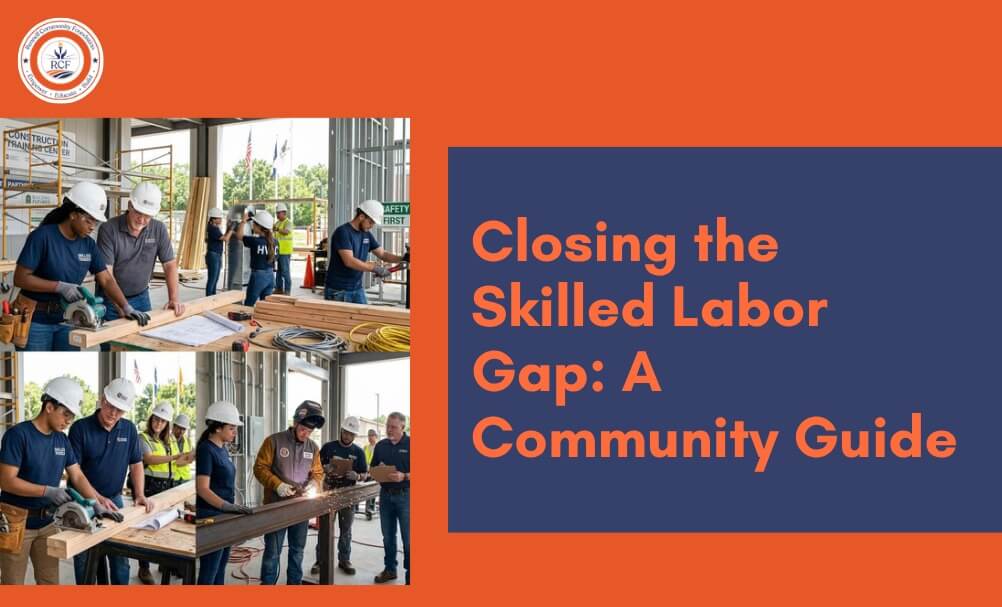
Many industries are struggling to find enough skilled workers to meet growing demand. Construction companies, manufacturers, HVAC businesses, and other employers often have open positions that remain unfilled for months. As experienced workers retire and some people enter the skilled trades, many communities are showing impact.
Addressing this shortage takes more than hiring campaigns. It needs long-term collaboration between employers, schools, workforce organizations, community groups, and local leaders to prepare and connect people with career opportunities. In this guide, we’ll look at why the skilled labor shortage exists, which industries are most affected, and the practical steps communities can take to strengthen their local workforce.
Whether you’re an educator, employer, parent, or community leader, you can play a part in helping more people discover and prepare for careers in the skilled trades.
What Is the Skilled Labor Gap?
The skilled labor gap refers to the disconnect between the number of open skilled positions and the number of qualified workers available to fill them. This is distinct from a general labor shortage.
Skilled trades, electricians, plumbers, welders, HVAC technicians, and machinists, among others, typically require technical education or apprenticeship training rather than a four-year college degree. Yet for years, career guidance in schools pushed students almost exclusively toward traditional university pathways, leaving vocational career pathways underfunded and underappreciated.
The result? An entire generation of workers who were steered away from trade careers that now offer strong wages, job security, and long-term growth.
Why the Skilled Labor Gap Continues to Grow
Several forces are converging to widen the gap. Understanding them is the first step toward addressing them.
An aging workforce: Millions of skilled tradespeople are retiring, and there aren’t enough younger workers entering the trades to replace them. This generational turnover is one of the single biggest drivers of the current shortage.
Declining enrollment in trade education programs: High school shop classes disappeared from many curricula over the past few decades. Fewer students are aware that trade education programs even exist, let alone that they offer a clear path to a well-paying career.
Infrastructure expansion: Large-scale infrastructure projects, roads, bridges, energy systems, broadband networks are demanding more skilled workers at exactly the moment when supply is tightest.
Rapid technology changes: Modern trades now need proficiency with digital tools, sensors, and automation systems. Workers without updated technical education may be left behind, adding a new dimension to the skills mismatch.
Career awareness challenges: Many young people and their families simply don’t know what a career in the skilled trades looks like or what it pays. Changing that perception is one of the most effective things a community can do.
As per U.S. Bureau of Labor Statistics Occupational Outlook Handbook, construction and extraction, installation and repair, and production occupations are all projected to see major demand in the coming years, reinforcing the urgency of skilled workforce development.
Industries Facing the Greatest Skilled Labor Shortages
The skilled labor shortage is not limited to one sector. It cuts across multiple industries that communities depend on daily.
Construction
From residential homebuilding to large commercial projects, construction companies struggle to find qualified carpenters, ironworkers, masons, and site supervisors. Project timelines extend. Costs rise. And housing affordability worsens as a direct result.
Electrical
The demand for licensed electricians is surging, driven by new construction, electric vehicle infrastructure, and renewable energy projects. The BLS projects strong employment growth for electricians through the end of the decade.
HVAC
HVAC technicians are in short supply across virtually every region of the country. As climate conditions push demand for both heating and cooling systems, the shortage directly affects homeowners and businesses alike.
Plumbing
Plumbers and pipefitters are among the most consistently in-demand skilled workers. The shortage is particularly acute in fast-growing communities where residential and commercial construction outpaces the available workforce.
Manufacturing
Modern manufacturing requires workers who can operate computer-controlled equipment, read technical schematics, and troubleshoot automated systems. Finding workers with both mechanical aptitude and technical education is increasingly difficult.
Transportation
Commercial truck drivers, logistics technicians, and equipment operators are needed at nearly every point in the supply chain. The driver shortage alone has measurable effects on delivery costs and timelines nationwide.
Why Communities Play an Important Role
Building a stronger skilled workforce takes support from the entire community, and everyone has a role to play.
Local governments can strengthen workforce development by supporting training programs, varied partnerships between employers and educators, and investing in initiatives who prepare people for careers that are in demand within community.
Families can help by encouraging young people to look for the skilled trades as a rewarding career option. When parents understand the opportunities these careers offer, they’re better equipped to guide their children as they make decisions about their future.
Employers can work closely with schools and training organizations, offer apprenticeships and internships, and invest in developing future workers instead of relying only on experienced hires.
Nonprofits and community organizations can connect with people who may not have easy access to training opportunities. They can also provide support such as career guidance, transportation assistance, tools, or other resources that help individuals complete their training.
How Workforce Development Programs Help Close the Skilled Labor Gap
Well-designed career training programs that prepare future skilled professionals do far more than teach technical skills. The best workforce development programs address the full arc of a person’s career journey.
That includes career exploration, skills training, mentorship from experienced professionals, apprenticeship placement, career readiness coaching, and job placement support after full program.
These programs are especially valuable for young adults who may not have a clear path forward, career changers who want to transition into a growing field, and people returning to the workforce after time away.
Workforce development programs that prepare young adults for successful careers have proven results in communities that invest in them. The key is connecting program graduates to real employers who are ready to hire.
Apprenticeships and Hands-On Training Create Long-Term Success
There’s no substitute for learning by doing. Apprenticeship opportunities combine on-the-job training with technical instruction, allowing participants to earn a paycheck while they learn a critical advantage for those who can’t afford to take years out of the workforce to study.
Apprenticeships even benefit employers. Businesses that partner with training providers to run apprenticeship programs get workers who are trained to their specific standards, reducing mismatch that even occurs when new hires arrive without practical experience.
Many apprenticeship programs lead to industry certifications which carry national recognition. For the worker, that certification is a portable credential. For the employer, it’s a reliable signal of competency. For the community, it’s a worker who may contribute for years or decades to come.
Community Partnerships Build Stronger Workforce Pipelines
The most effective workforce pipeline development efforts aren’t siloed; they’re built on genuine partnerships between schools, employers, training providers, nonprofits, and industry associations.
When a local community college partners with a regional construction firm to develop a tailored curriculum, both sides win. When an industry association works with a nonprofit to provide tools and equipment to trainees who can’t afford them, barriers fall. When employers agree to hire from local training programs, those programs become sustainable.
These workforce pipeline development partnerships which help build tomorrow’s workforce create systems where everyone, educators, employers, and workers operates from a shared goal. That alignment is what separates short-term workforce initiatives from lasting community transformation.
Scholarships and Financial Support Remove Barriers
Paying for training is one of the biggest challenges many people face when considering a career in the skilled trades. Even though trade schools and certification programs usually cost less than a traditional college degree, the expense can still be difficult to manage for many individuals and families.
Financial assistance may make that path much more accessible. Scholarships, workforce grants, and employer-funded training programs help reduce the cost of education and open the door to more career opportunities. Many businesses, community organizations, foundations, and public programs also support skilled trades training because they understand that investing in people today helps build a stronger workforce for the future.
Practical Ways Communities Can Help
You don’t need to run a workforce program to make huge difference. Here are concrete actions that individuals and organizations can take:
- Promote skilled trades in schools, community events, and social media. Visibility is crucial.
- Support apprenticeship opportunities by advocating for employer participation and funding.
- Mentor young people who are exploring vocational career pathways but lack access to professional networks.
- Invest in workforce development by donating to or partnering with local organizations doing this work.
- Advocate for trade education in school board meetings, city council discussions, and with elected officials.
- Hire locally from training programs, giving graduates the chance to build a track record.
The Future of Skilled Workforce Development
The need for skilled workers is expected to keep increasing in next years. Expanding renewable energy projects, growth in advanced manufacturing, and an investment in infrastructure are creating some new opportunities.
As technology becomes a bigger part of these industries, the nature of the work will continue to evolve. Workers will need to keep learning new tools, equipment, and techniques, makes ongoing training and career development more important than ever.
Building a strong workforce is not something that happens overnight. It takes continued support for technical education, career readiness programs, apprenticeships, and skills training so people can prepare for the jobs employers need to fill.
For anyone exploring career options or training opportunities, resources such as CareerOneStop from the U.S. Department of Labor give helpful information on career paths, education programs, apprenticeships, and local workforce services.
Closing the Gap Starts Here
Addressing the skilled labor shortage requires people and organizations to work together. Schools, employers, families, nonprofits, and local governments all have an important role in preparing people for careers in the skilled trades. While there isn’t any one solution that fits every community, there are practical steps that make a real difference.
The Rennell Community Foundation is committed to doing exactly that. Through workforce development initiatives, career awareness programs, mentorship connections, scholarship support, and strategic partnerships, the foundation helps prepare the next generation of skilled professionals while strengthening the communities they’ll serve. To support this work or learn how to get involved, connect with our team to support workforce development in your community.
Frequently Asked Questions
What is the skilled labor gap?
The skilled labor gap is the difference between the number of open skilled trade positions and the number of qualified workers available to fill them. It reflects a mismatch in training and experience, not simply an overall shortage of people looking for work.
Why is there a shortage of skilled workers?
The shortage stems from several factors: mass retirement of experienced tradespeople, declining enrollment in trade education programs, growing infrastructure and energy demands, and insufficient career awareness among young people about vocational career pathways.
What industries are most affected by skilled labor shortages?
Construction, electrical, HVAC, plumbing, manufacturing, and transportation are among the most severely impacted industries. These sectors rely on workers with hands-on technical training that takes time and investment to develop.
How can communities help close the skilled labor gap?
Communities can promote skilled trades, support apprenticeship programs, invest in workforce development organizations, mentor young people exploring vocational pathways, and advocate for trade education in local schools and government policy.
How do workforce development programs support skilled trades?
Workforce development programs provide structured career exploration, technical skills training, mentorship, apprenticeship placement, and job readiness support. They help individuals navigate the path from interest to employment in the skilled trades.