
Employer Partnerships in Skilled Trades: Jobs Start Here
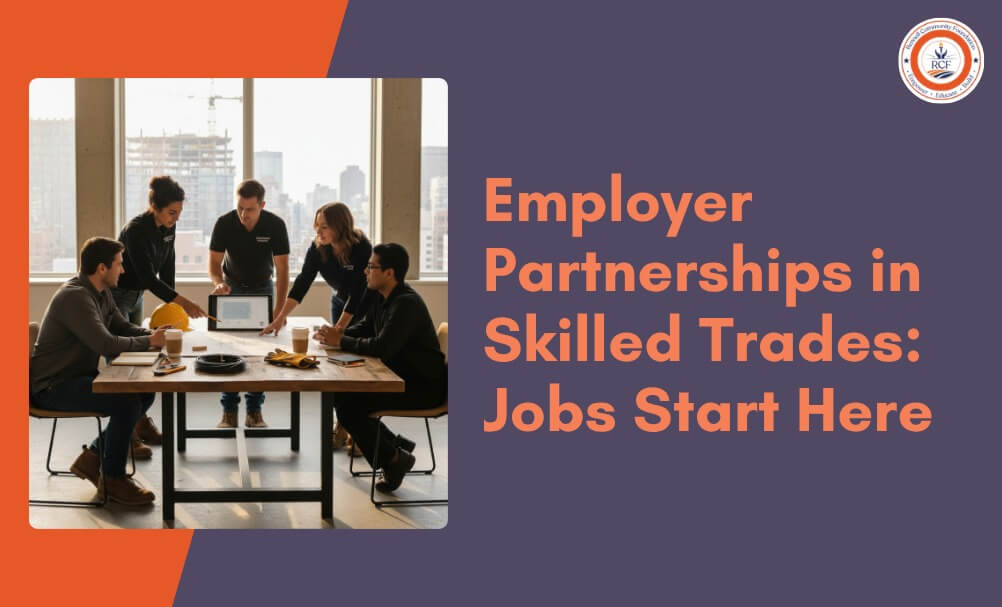
Finding a job after finishing your training can be frustrating. Many students spend months learning a skill, only to struggle when it’s time to actually get hired. You send out many applications, wait for responses, and often hear nothing back. Also when you have the right skills, the lack of experience can make it hard to get your foot in the door.
This is where employer partnerships in skilled trades make a huge difference. These connections help link students directly with companies that are actively looking for skilled workers. Instead of guessing what employers want, you get to learn the exact skills that businesses in your area are hiring for.
Programs built around these partnerships make the transition from training to employment much smoother. They make a clear path forward, giving students better chances of landing stable, well-paying jobs while also helping companies find the talent they need to grow.
What Are Employer Partnerships in Skilled Trades?
At their core, employer partnerships in skilled trades are agreements between local businesses and educational institutions. Trade schools, community colleges, and non-profit organizations team up with local companies. Together, they create a direct path from the classroom to the job site.
Instead of teaching a generic curriculum, the school teaches exactly what the employer needs. The business might provide equipment, share industry insights, or send experienced workers to teach classes. In return, the school provides a steady stream of highly trained, job-ready graduates.
These trade employer partnerships take the guesswork out of finding a job. Students know that if they work hard and master the material, a real job is waiting for them. It is a practical, straightforward solution to a complex economic problem.
Why Employer Partnerships Matter
The traditional job search takes a lot of time. Companies post job ads, sort through hundreds of applications, conduct varied rounds of interviews, and then spend weeks training the new hire. Employer partnerships in skilled trades make this entire process much faster and smoother.
When schools and businesses work together, students gain real-world experience before they even graduate. They practice on the exact machines they will use on the job. They learn the specific safety protocols the employer requires. This means they graduate with job-ready skills that make them immediately valuable to a company.
This system greatly reduces local unemployment. According to U.S. Bureau of Labor Statistics, demand for skilled trade workers like electricians and wind turbine technicians is projected to grow much faster than average. These workforce development partnerships ensure that as these jobs open up, there are qualified people ready to step in.
How Employer Partnerships Work
These collaborations do not happen by accident. They require careful planning and a deep commitment from both the school and the business. Here are the most common ways these programs operate.
Training Programs Work with Employers
The most basic level of partnership involves communication. Training schools regularly meet with local business owners. They discuss which skills are currently lacking in the workforce. If local construction companies need more people who understand advanced blueprint reading, the school adds that to the curriculum. These employer training programs ensure the education stays relevant.
Apprenticeship Opportunities
Apprenticeship programs are the gold standard for learning a trade. In this setup, a student works for an employer while still taking classes. They earn a wage while they learn. An experienced mentor guides them on the job site. Once the apprenticeship is complete, the student usually transitions into a full-time, fully licensed professional role.
Internship Placements
Similar to apprenticeships, internship placements offer hands-on practice. An internship is usually shorter and might happen during the summer or a final semester. It allows the employer to test out a potential worker, and it allows the student to see if they like the company culture. These short-term trade school partnerships often lead to permanent job offers.
Direct Hiring Pipelines
Some partnerships are so strong that they create a direct hiring pipeline. When a student passes their final exams, they bypass the regular application process entirely. The employer trusts the school’s standards so much that they hire graduates immediately. These industry hiring programs remove the stress of job hunting entirely.
Benefits for Students
For someone learning a trade, the benefits of these programs are enormous. The most obvious advantage is access to real job opportunities. You are not only learning for the sake of learning; you are training for a specific, open position.
Students also gain invaluable hands-on experience. Reading a textbook about wiring a house is very different from actually holding the tools and doing the work. You get to practice under the watchful eye of a seasoned professional.
Mentorship is another massive benefit. You build relationships with people who have worked in the industry for decades. They can offer advice, write letters of recommendation, and guide your early career choices. All of this leads to faster employment and a much higher starting salary.
Benefits for Employers
Hiring skilled workers is a major challenge for many companies. Every time a business hires someone off the street, they take a risk. The new employee might lack the right skills, or they might not fit in with the team.
Partnerships eliminate much of this risk. Employers get a first-hand look at students before hiring them. They know exactly what the student has been taught. This greatly reduces the time and money spent on onboarding and training new staff.
Furthermore, employees who come through job placement programs tend to stay longer. They feel a sense of loyalty to the company that helped them launch their career. For an employer, having a reliable, long-term workforce is incredibly profitable.
Industries Using Employer Partnerships
Many different sectors rely heavily on these programs to find their workforce.
- Construction: Construction job partnerships help builders find carpenters, framers, and heavy equipment operators.
- Electrical: With the rise of smart homes and green energy, electrical companies desperately need workers who understand modern wiring systems.
- Plumbing: This vital trade requires a mix of classroom theory and strict hands-on code compliance, making apprenticeships essential.
- HVAC: Heating, ventilation, and air conditioning technology changes rapidly. Partnerships keep students up-to-date on the latest climate control systems.
- Manufacturing: Modern factories use complex robotics and machinery. They partner with schools to find technicians who can program and repair these advanced systems.
Challenges Without Partnerships
When these connections do not exist, everyone suffers. The biggest issue is the skill gap. Schools might teach outdated techniques because they do not talk to modern employers. Students graduate thinking they are ready, only to find their skills are useless on a modern job site.
This leads to delayed hiring. Companies leave positions open for months because they cannot find anyone qualified. Work slows down, projects get delayed, and the local economy stagnates.
There is also a severe mismatch between training and jobs. A community might have a surplus of trained welders but a severe shortage of plumbers. Without communication between schools and businesses, educational resources are wasted on the wrong career paths.
How to Find Employer Partnership Programs
If you want to take advantage of these opportunities, you need to know where to look. Start by contacting local trade schools and community colleges. Ask their admissions office specifically about job placement rates and corporate sponsors.
Community programs and non-profits are also excellent resources. Many cities have specialized organizations dedicated to reducing unemployment by funding vocational training.
Finally, look for state-run workforce development organizations. They often maintain public databases of registered apprenticeship programs and companies actively seeking entry-level trainees.
Start Your Career with the Right Support
Building a career in skilled trades is easier when you have the right connections. Employer partnerships in skilled trades help students move from training to real jobs faster and with more confidence. You do not have to navigate the complex job market completely alone.
Programs like those offered by Rennell Community Foundation help connect students with real employers. RCF works directly to connect students, training programs, and local businesses to create tangible, real career opportunities in the skilled trades. Through financial support, community mentorship, and direct industry connections, the foundation helps hardworking individuals take the vital next step toward stable and meaningful work.
If you are ready to begin your journey, visit Rennell Community Foundation to explore programs and opportunities that can help you get started on a rewarding career path today.
Frequently Asked Questions
What are employer partnerships in skilled trades?
They are collaborations between employers and training programs to help students get real jobs. The school tailors its classes to match exactly what the local businesses need.
Why are employer partnerships important?
They help students gain experience and connect directly with job opportunities. This bridges the gap between learning a trade and actually getting hired to perform it.
Do employer partnerships guarantee jobs?
Not always, but they greatly increase the chances of getting hired. While you still have to show up, work hard, and pass your classes, having that direct company connection puts your resume at the top of the pile.
Who can join these programs?
Students, apprentices, and individuals interested in skilled trades careers. Many programs are open to recent high school graduates, career changers, and veterans looking to re-enter the civilian workforce.