Many young people know about careers that need a college degree. But they may not know much about jobs in construction. They may have never seen an electrician at work, watched a welder join metal, or learned how a plumber fixes pipes. Without this experience, students may miss out on good career options.
Youth Career Exposure helps students learn about different jobs in the construction industry. It gives them a chance to see how people work, what skills they need, and what these jobs are like in real life.
The goal is not to make students choose a career at a young age. It is to help them understand their choices. Career fairs, school visits, training programs, and simple hands-on activities can help students find out what they enjoy.
For example, a student who enjoys fixing things may become interested in electrical work or plumbing. Another student may enjoy building things and want to learn more about construction.
Youth Career Exposure helps students ask questions, try new things, and learn about different career paths. When students get these chances early, they have more time to understand their interests and make better career choices for their future.
What Is Youth Career Exposure to Construction Trades?
Career exposure, in plain terms, means giving a young person a genuine look at what a job involves before they have to decide anything about their future. For construction trades specifically, that might include career talks from working tradespeople, school presentations, career fairs, visits to training centers, supervised jobsite demonstrations, hands-on classroom activities, job shadowing, mentorship, career and technical education (CTE) programs, and pre-apprenticeship opportunities.
None of these activities ask a student to choose a trade on the spot. They simply answer a basic question: what does this job actually look like day to day? Every one of these activities should be age-appropriate and follow applicable school, workplace, supervision, and safety requirements that’s non-negotiable, and it’s also what separates legitimate career exposure from something riskier.
Why Early Career Exploration Matters
Giving students time to explore construction trades early carries real advantages. It lets them discover a wider range of careers than they’d encounter on their own, understand what the work genuinely involves, and identify where their interests and aptitudes actually line up. Early exposure also gives students time to learn what skills and training a given career requires, explore different education pathways, and ask working professionals direct questions instead of relying on secondhand assumptions.
None of this guarantees that early exposure leads someone into a trade career. That’s not the goal, and framing it that way sets up a false expectation. The goal is informed choice a student who has seen enough to make a confident decision, whether that decision points toward a trade, a four-year degree, or something else entirely.
Construction Careers Young People Can Explore
Construction is not just one type of job. It includes many jobs that need different skills and training. Youth Career Exposure helps students learn about these jobs and understand which ones may be right for them.
1. Carpentry
Carpenters build and repair things made from wood and other materials. They work on doors, walls, floors, and other parts of buildings. This job is good for students who enjoy making things with their hands. Most carpenters learn through training and practice.
2. Electrical Work
Electricians make important contributions to public safety by installing and repairing electrical systems. Students who like using tools, or who are good at solving problems, may like this work.
3. Plumbing
By installing and maintaining water systems and related equipment, plumbers contribute to the public health and safety system. Students interested in plumbing can learn this type of work through training and/or apprenticeships.
4. HVAC
People in this field install and repair heating, ventilating, and air conditioning systems. They keep buildings comfortable. Students who enjoy working with machines may like this job.
5. Welding
Welders join metal by melting and fusing it. They are helpful in constructing machines, bridges and buildings. This job requires care and good hand skills.
6. Construction Equipment Operations
Construction equipment operators use large equipment to help build roads and other structures. Students who enjoy working with large machines may be interested in this career.
7. Construction Supervision and Management
Constructon managers oversee the safe and timely completion of a project by guiding and motivating the project workforce. Many construction managers have a background as construction workers.
Why Youth Career Exposure Matters
The construction industry provides a myriad of different learning and advancement opportunities, i.e., through apprenticeships, special training and/or education, and/or further degree.
Exposure to different career opportunities at an early age through Youth Career Exposure provides youths an opportunity to develop various skills, learn and understand the interests they have, and make career choices in line with their aspirations.
Why Construction Trades Deserve a Place in Career Conversations
Construction trades offer many career options for young people who enjoy working with their hands, building things, and solving problems. These jobs help build homes, schools, roads, and other places we use every day. Through U.S. Bureau of Labor Statistics, about 587,000 job openings are expected each year in construction and extraction occupations from 2025 to 2035.
According to the same report, the median wage for these jobs was $59,540 in May 2025. This was more than the $50,980 median wage for all U.S. jobs. Not every trade requires the same level of training. Some occupations require a high school diploma and a paid apprenticeship. Others require training at work. Still, others require training at a vocational or technical school. Students must understand these careers require education and training, just as other careers. Formal training must be combined with deliberate practice. Exploring skilled trades can give young people more informed choices.
7 Ways Young People Can Explore Construction Careers
Youth Career Exposure helps students learn about different jobs in construction. Students can meet workers, visit training centers, and try simple activities. These experiences help them understand what they enjoy and what career they may want in the future.
1. Attend Skilled Trades Career Fairs
Career fairs help students learn about different construction jobs. They can meet electricians, plumbers, carpenters, and other workers. Students can ask questions about their work, skills, and training. This helps them learn about jobs they may not know about.
2. Visit Career and Technical Education Programs
Students have the opportunity to go to various training centers and observe how construction workers are trained. Students can look at different tools and machines and observe various work areas. They can observe teachers or workers demonstrate various tasks.
3. Take Part in Hands-On Career Activities
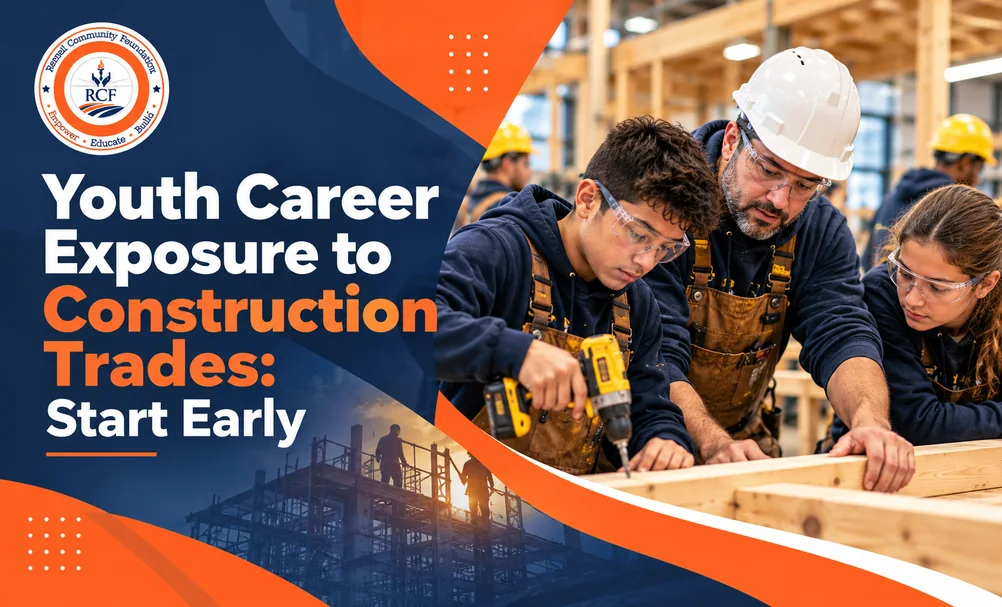
Students have the opportunity to take part in activities that help them learn through doing. These activities may range from simple tasks like measuring a piece of wood to using power tools. Each of these activities help students discover a task or activity that they enjoy and may want to pursue.
4. Talk With Skilled Trade Workers
Students can speak with people who work in construction. Workers can share what they do every day, how they learned their skills, and what problems they face. This gives students a better idea of each job.
5. Try Job Shadowing
Job shadowing is when students are allowed to observe employees at work. Students are able to learn how workers follow safety rules, and the procedures to use tools to get tasks done.
6. Learn About Pre-Apprenticeship Programs
Pre-apprenticeships are training programs that aid students in construction and other similar careers. They provide the basic skills and training on rules and practices needed for safety to help students understand what they will have to study and learn to be able to be accepted into an apprenticeship.
7. Learn About Apprenticeship Programs
Apprenticeship programs are a mixture of workplace learning and training. Students learn while doing a paid job, and also attend training sessions to help hone their skills for better job performance.
According to Apprenticeship.gov, more than 415,000 young apprentices took part in apprenticeship programs across the United States in 2025.
Youth Career Exposure gives students a chance to understand construction careers before making a decision. It helps them build confidence and plan for their future.
How Hands-On Learning Makes Career Exploration More Meaningful
It’s one thing to read about carpentry. It’s entirely another to watch a master craftsman at work. It’s one thing to hear about the career opportunities in HVAC and quite another to visit a training lab to see students interact with hands-on equipment. It’s one thing to read about welding and quite another to see, in a properly supervised environment, students participating in a welding demonstration.
Young people often need to experience both the physical and technical sides of a construction career to make it feel real. Activities and demonstrations often provide that integration and make the opportunities real. There is no better way to communicate the opportunities and realities of construction careers than with hands-on learning.
How Career and Technical Education Supports the Pathway
Career and technical education pathways provide a direct line between classroom learning and career preparation. CTE can provide students the skills, knowledge and practical experiences they will need to make informed career choices, develop opportunities and/or employment in various careers, and in many cases, receive recognized employment or educational credentials.
Due to CTE’s connections to both employment and apprenticeship, a classroom-based credential can lead to a career-related opportunity. CTE serves as a link between unemployed job seekers (i.e. the general awareness group) and “committed” training (i.e. hands-on training). This may be particularly evident in the construction trades.
How Pre-Apprenticeship Can Create the Next Step
Youth Career Exposure helps students learn about different jobs and find what they enjoy. Once students become interested in a construction job, they can join a pre-apprenticeship program.
These programs teach basic job skills, safety rules, and how to work with others. Students also learn more about different construction jobs and prepare for future training.
Pre-apprenticeship programs can help students move into apprenticeships, where they learn while working.
According to Apprenticeship.gov (2025), over 93% of people who complete Registered Apprenticeship programs stay with their employers.
This shows how these programs can help students build skills and find jobs.
From Career Exposure to Apprenticeship
Here’s what the pathway looks like in its entirety:
Career Awareness → Career Exploration → Hands-On Exposure → CTE / Pre-Apprenticeship → Apprenticeship or Further Training → Skilled Career
This is just one possible pathway and is not a mandatory pathway for every construction career pathway. Some students will move through all of these steps. Some students will decide that the construction industry is not for them, and use what they’ve learned to move into a different field. Both of these outcomes are a success because they are the result of an informed decision.
How Schools Can Introduce Construction Careers
Schools participate in Youth Career Exposure in a variety of ways. They host career fairs, invite skilled workers to speak to students, organize visits to training centers and help design different activities that students can do to understand how a job is done. Students can do simple activities and other experiments that help them learn about the functioning of different jobs. Working with students to understand a job helps them to identify their own interests and relate to the workers. It takes just one visit or talk with a skilled worker to help students start thinking about their future careers.
How Employers Can Help Young People Understand the Trades
Employers can support career education through career talks, facility tours, mentorship, job shadowing, career fairs, CTE partnerships, and work-based learning where appropriate. The emphasis here belongs on education and exposure, not recruitment employers who show up to explain their trade, rather than pitch it, tend to earn more genuine interest from students in the long run.
Parents and Families Play an Important Role Too
You don’t only make career decisions at school. Families can discuss career pathways and research them together. They can attend career events as a family, and compare the training for different career pathways. It is important to avoid treating college as the only way for success and pushing a young person towards a trade simply because it seems more practical.
The goal for families, same as for schools, should be helping a young person make an informed decision based on their own interests, abilities, and goals not a decision shaped entirely by someone else’s assumptions.
Removing Financial Barriers to Skilled Trades Education
After deciding on a career in construction, many financial barriers exist including the costs of training, tools and equipment, certifications and other educational resources. For families and students grappling with these costs, scholarships for the future skilled tradesperson can help turn an interest into action and career in the skilled trades.
How Donors Can Support Early Career Exposure
Donors and businesses have a meaningful role to play in expanding access to career awareness programs, educational resources, tools and equipment, career events, training opportunities, scholarships, mentorship initiatives, and community partnerships. Every one of these contributions removes a barrier between a curious student and a real opportunity to explore. Readers interested in this side of the picture can learn more about donor support for career training programs.
How Communities Benefit From Better Career Awareness
Youth Career Exposure helps young people learn about different jobs and make better career choices. When students know more about their options, they can choose the right training programs. This may help them learn useful skills and find good jobs in the future. It can also help local businesses find skilled workers. However, this takes time. Youth Career Exposure cannot solve worker shortages quickly, but it can help build a stronger workforce over time.
How Rennell Community Foundation Supports Skilled Trades Opportunities
Rennell Community Foundation (RCF) supports this entire pathway through programs supporting skilled trades education and career development, including scholarships, tools, training support, mentorship, real-world opportunities, and community programs built around construction trades.
The underlying message is simple: young people cannot consider opportunities they never learn about. Career awareness is one essential part of building stronger pathways into skilled trades, and RCF works to make that awareness accessible to more students, families, and educators.
Start Career Conversations Early
There’s no reason to think that looking at skilled trades with young people means asking them to make a career choice. Students should have opportunities to learn about different employment possibilities and the skills required to perform different jobs and figure out their interests.
Schools, families, businesses, and the community can work together to provide opportunities for students to learn about construction, the electrical, plumbing and heating trades, carpentry and welding. Events that provide hands-on exposure to various careers are helpful for young people to visualize themselves in different jobs and occupations.
The goal is not to push students toward one career. It is to help them explore different options, ask questions, and make choices based on their interests and goals.
Youth career exposure to construction trades can help students learn about career paths they may not have considered before.
Rennell Community Foundation supports skilled trades education, training, mentorship, and career development. By working with schools, businesses, donors, and local communities, the foundation helps support learning opportunities.
To learn more about these efforts and ways to get involved, connect with Rennell Community Foundation today.
Frequently Asked Questions
What is youth career exposure to construction trades?
Youth career exposure to construction trades means giving young people age-appropriate opportunities like career talks, jobsite demonstrations, and training center visits to learn what construction careers actually involve before making any career decisions.
What construction trades can young people explore?
Young people can explore carpentry, electrical work, plumbing, HVAC, welding, construction equipment operation, and construction supervision, among other specialized roles within the broader construction field.
Why should students learn about skilled trades early?
Early exposure gives students more time to discover their interests, understand what different careers actually involve, and make an informed decision about their future rather than choosing a path based on limited information.
How can high school students explore construction careers?
High school students can attend career fairs, visit CTE programs, participate in supervised hands-on demonstrations, talk with trade professionals, shadow workers where permitted, and research pre-apprenticeship and apprenticeship opportunities.
What is the difference between pre-apprenticeship and apprenticeship?
Pre-apprenticeship prepares participants with foundational skills and workplace knowledge before entering a Registered Apprenticeship, which combines paid on-the-job training with technical classroom instruction.
How can parents help young people explore skilled trade careers?
Parents can talk openly about different career paths, research trades together, attend career events, and avoid treating college as the only valid option supporting their child’s own interests rather than steering them toward a predetermined choice.