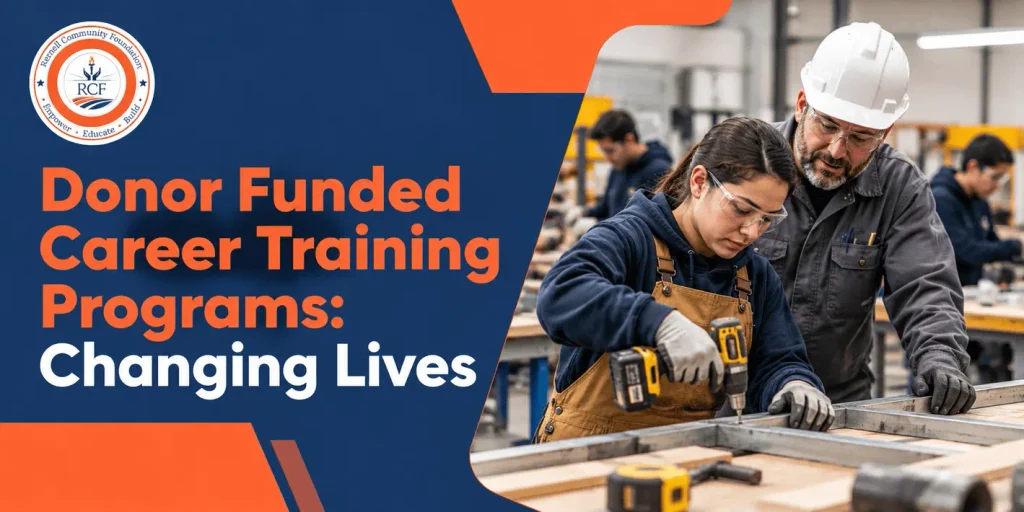
Donor Funded Career Training Programs: Changing Lives
While many are motivated to learn a trade, barriers can exist between a prospective student and a classroom or shop. Financial barriers such as tuition, tools, or certification cost the student a real barrier to entry. Transportation and lack of knowledge can also discourage, or simply frustrate a student who is motivated to become a member of the trades.
This is where donor funded career training programs can make a real difference. Nonprofit and community organizations rely on charitable contributions to help address these barriers, giving more people the chance to build practical skills and pursue stable, meaningful careers. Donors aren’t simply supporting a single class or purchasing a piece of equipment. Their contributions can help create opportunities for people to gain hands-on skills and move toward sustainable careers in fields that need skilled workers.
Organizations such as the Rennell Community Foundation help individuals learn about opportunities by providing programs that help develop careers in the skilled trades. Knowing how the funding process operates provides the Rennell Community Foundation the ability to put funding toward programs that help cultivate careers. This information helps potential donors and program participants to develop an understanding of the rationale behind the funding process.
What Are Donor Funded Career Training Programs?
Donor Funded Career Training Programs provide career and workplace preparation services, training, and scholarships through charitable donations from individuals, businesses, foundations, and the community. Skilled trades and vocational education opportunities are made wider and broader through the services of these programs and training by means of donations rather than relying on the public purse (like the budget) or individual’s savings.
Who Can Fund Career Training Programs?
Donor support for career training can come from a range of sources, including:
- Individual donors who want to give back to their communities
- Local businesses looking to invest in their future workforce
- Corporate partners with an interest in workforce development philanthropy
- Foundations dedicated to education and community growth
- Community organizations which connect resources with local needs
What Can Donor Funding Support?
Donor-funded scholarships and contributions can support a wide variety of needs, including:
- Scholarships for tuition or coursework
- Training expenses
- Tools and equipment
- Safety gear
- Certification and licensing fees
- Transportation or other support services
- Mentorship initiatives
- Career-development resources
The U.S. Government Accountability Office has documented examples of philanthropic support for career and technical education being used to expand CTE programs, fund scholarships and apprenticeships, and cover transportation and other support services for participants (GAO, via ERIC). This shows that career training donations often extend well beyond the classroom.
Why Donor Funded Career Training Funding Matters
Career education requires more than motivation. Even where publicly funded CTE opportunities exist, programs and participants frequently have additional, unmet needs. The federal government currently provides roughly $1.4 billion annually in Perkins V state formula grants for career and technical education, which reflects just how significant CTE is within the broader U.S. workforce system (U.S. Department of Education, Office of Career, Technical, and Adult Education).
Public funding lays an important foundation, but it doesn’t always cover everything a student or trainee needs. This is where philanthropic support for education can complement, not replace public and employer investment. Workforce development funding from donors can help expand:
- Educational opportunities
- Training aids
- Appropriate tools and technology
- Career options information
- Workplace exposure
- Workplace certificates and credentials
- Addressing training constraints to career development
How Donor Funded Career Training Programs Can Change Lives
Removing Barriers to Training
Some people find it very difficult to afford training. Donor-funded scholarships and fellowships can help pay for training costs such as tuition, fees, training materials, and other related expenses.
Practical Training
Effective career training is (and should be) more than just book training. On-the-job training gives trainees the opportunity to learn and practice skills they can use in the workplace.
On-the-Job Training
Skilled training often requires the use of various pieces of equipment. Donor support can help acquire the training equipment.
Career Certifications
Some careers and occupations require workers to hold specific industry certifications and endorsements. Donor support can help pay for such certifications.
Employment Opportunity Training
Although donor support cannot ultimately guarantee employees will be hired, it can help individuals acquire the skills and credentials that will be helpful in employment.
The Hidden Costs That Can Stand Between Donor Funded Career Training and Opportunity
Tuition even gets the most attention, but it’s rarely only expense standing between someone and career training. Additional costs may include:
- Tools and specialized equipment
- Work clothing
- Protective gear
- Transportation to and from training sites
- Certification and testing fees
- Training materials and supplies
The Roundhouse Foundation specifically identifies non-tuition costs, such as equipment, tools, and protective gear, as significant barriers for participants in career and technical education programs. These “hidden costs” can quietly derail someone’s plans even when tuition assistance is available, which is exactly why donor support for career training so often extends beyond covering just the cost of a class.
Why Skilled Trades Need Community Support
Learning a trade like electrical work, plumbing, carpentry, HVAC, welding and construction requires manual skills and learning with machinery and equipment. Education in these trades also requires “hands on” training. Community programs to learn these trades equip students with the skills and training to get employed in these in-demand trades.
Funding from the community and donors helps provide high quality, low cost or no cost training for the trades. Investing in training for the trades helps the community and the local economy.
Donor Support Can Go Beyond Tuition
There are other ways to support career education besides giving scholarships. These may include:
Scholarships ⇒ Tools ⇒ Equipment ⇒ Training ⇒ Mentorship ⇒ Career Resources
By providing different layers of support to vocational training, donors are able to fund what is most meaningful to them. This may include offering a scholarship to cover training costs or providing training equipment to a graduate.
How Scholarships Can Remove Financial Barriers
Tuition, training and other expenses related to education may be covered by scholarships. Money raised by donors may be used to award scholarships to students.
The amounts and the criteria to be eligible to receive a scholarship will vary. How the funds will be spent will also vary. For example, the scholarship may pay tuition, but may not provide funds to pay for books and other expenses.
Applicants for scholarships should evaluate the awards in relation to their educational goals. Read the program rules to understand what education-related expenses may be paid for by the scholarship.
How Businesses Can Support Donor Funded Career Training
Because much of today’s workforce development philanthropy comes from individual donors, businesses represent an important and sometimes underused source of support.
Corporate Donations
Direct financial contributions from businesses can fund scholarships, tools, or general program operations.
Program Sponsorships
Training programs and workshops help build an individual’s employment skills and connect them to the labor market. Various companies are invited to sponsor these programs to increase their reach and impact.
Tools and Equipment
It is common practice for companies to donate equipment and supplies to help new training institutions establish shop floors and laboratories.
Employee Mentorship
Employees at different levels and functions are available to be training program mentors.
Community Partnerships
A number of companies have training as their core business, and focus on working with various partners to provide diverse training. Others have sponsorship programs focusing on workforce development and/or apprenticeships.
Why Local Donors Can Make a Meaningful Difference
While corporate giving plays an important role, individual and local donors often understand community needs on a more personal level. A recent donor guide on workforce development specifically identifies vocational education, credentialing programs, scholarships, job readiness support, and local nonprofit funding as key areas where individual donors can make an impact (Inside Philanthropy).
Local giving allows organizations to respond directly to the specific needs of the people they serve, whether that’s transportation assistance in a rural area or tool kits for a specific trade program.
From a Donation to a Career Opportunity: How the Impact Can Grow
While results may differ from case to case, and from program to program, donations can help create the following impact:
Donation –> Access to training –> Development of skills and/or attainment of credentials/work experience –> Employment–> Improved standard of living–> Better integration in the community
This pathway illustrates the potential impact of a single donation. It should be noted that a single donation may not impact an individual’s life in the same way, but may create different, but positive, impacts on the individual and/or family, and the community at large.
What Donors Should Look for in Career Training Programs
Potential donors want to make sure their money is used responsibly. Consider the following questions before making a donation.
- First, do you agree with the mission of the organization? If not, don’t contribute.
- Next, ask how your donation will help provide training, scholarships, or other aids.
- Will supporting this organization help enrich practical skills necessary for careers?
- Do they assist in connecting educators and career enablers?
- Do they help develop the whole person?
- Do they have an established program to help achieve their mission? Are their programs strategically aligned?
- Are donors given a detailed breakdown of programs?
Measuring the Impact of Donor Funded Career Training
Donors want to know the real impact of their donations. Some potential impact indicators may include:
- Total number of individuals supported
- Number of scholarships and training awards granted
- Number of training and certification programs completed
- Number of program participants
- Number of tools and resources distributed
- Program completion rates
- number of individuals placed in apprenticeships
- Number of individuals employed as a result of a program
Responsible organizations also want to demonstrate impact and may provide program reports which include verifiable metrics.
How Community Partnerships Multiply the Impact
There is no group that can create effective workforce development programs in isolation. Most successful programs rely on integration and collaboration of multiple entities, including donor groups, employers, educators and training providers, nonprofit organizations, mentors, and community leaders.
Because partners work together to provide scholarships, mentorships, paid work experience and/or work-related tools, the return on investment for scholarships is significant. Scholarships and other educational support increase in value because of the other benefits provided.
How Rennell Community Foundation Supports Skilled Trades Opportunities
Rennell Community Foundation works to expand access to skilled trades education through scholarships, tools, training support, and mentorship connections. The foundation’s approach centers on removing the practical barriers that often stand between motivated individuals and real career opportunities, whether that means funding a scholarship, supporting career and technical education pathways, or connecting participants with experienced mentors in their chosen trade.
By focusing on both tuition and the hidden costs of training, Rennell Community Foundation aims to give people a realistic, well-supported path into skilled trades careers.
Key Takeaways
The cost of education and career training can be difficult for some people. Tuition, tools, safety equipment, learning materials, certification fees, and other expenses can add up quickly. These costs may make it harder for someone to begin or continue their training.
Donors, businesses, nonprofits, and community partners can help reduce some of these barriers. Their support may help provide scholarships, training resources, tools, equipment, mentorship, and practical learning opportunities. Every type of support can play a different role in helping people prepare for skilled trades careers.
Supporting career training does not guarantee a job or career success. However, it can give people better access to the education, resources, and guidance they need to develop useful skills and prepare for future opportunities.
Rennell Community Foundation works to support skilled trades education, training, mentorship, and career development. Community support can help strengthen these efforts and create options or opportunities for people to learn and grow more.
If you would like to make a difference, connect with Rennell Community Foundation to learn about current programs and ways you can support skilled trades education.
Frequently Asked Questions
What are donor funded career training programs?
Donor funded career training programs where contributions from individuals, businesses, or foundations help pay for career education costs like tuition, tools, or certifications. They help nonprofit organizations expand access to skilled trades and vocational training for people who need financial support.
How can donations support career training?
Donations can fund scholarships, training materials, tools, safety equipment, certification fees, and mentorship programs. This support helps reduce financial barriers so more people can complete training and pursue careers in skilled trades.
What can career training donations pay for?
Career training donations can cover tuition, tools, protective gear, transportation, certification costs, and training materials. Some donations also fund mentorship programs or general operating costs for training organizations.
Why should businesses support skilled trades education?
Businesses benefit from a well-trained future workforce, and supporting skilled trades education helps build a pipeline of qualified workers. It also allows companies to give back to their communities while strengthening local industries they depend on.
Can donations help pay for tools and training equipment?
Yes. Many skilled trades require specialized tools and protective equipment that can be expensive for students. Donor contributions often help cover these costs, which can otherwise be a significant barrier separate from tuition.
How can I support skilled trades career training in my community?
You can support local career training by donating to scholarship funds (donor funded career training programs), sponsoring a training program, or donating tools and equipment. Partnering with a community organization like Rennell Community Foundation is a direct way to get involved.