
Construction Career Training Programs: Build a Real Career
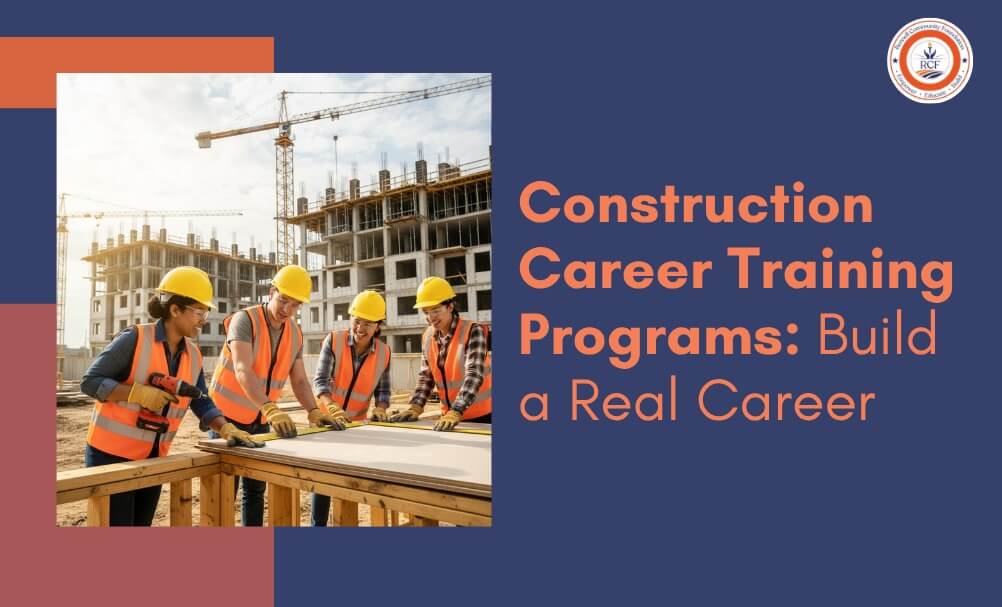
Many people face job uncertainty after high school or when looking to change paths. Four-year college degrees are expensive, and they do not always guarantee a secure job after graduation. If you want a stable, high-paying job that you can start quickly, the trades offer an excellent alternative.
Construction career training programs are the perfect starting point for anyone ready to learn practical skills. These programs may give you the exact knowledge and hands-on experience you need to secure a job. Instead of sitting in a lecture hall for years, you learn by doing. You get to build a real, rewarding future without taking on massive student debt.
We will explain everything you need to know about entering the skilled trades. You will discover the varied types of training available, how to find the right path for your interests, and where to find financial support to pay for your education.
What Are Construction Career Training Programs
Construction career training programs are built to teach you exactly what you need to work on real job sites. Instead of covering a wide range of theory like a typical college course, these programs stick to hands-on skills that actually matter in the field.
You’ll spend your time learning how to handle tools properly, know blueprints, follow safety rules, and carry out real construction tasks. The goal is simple to make sure you’re ready to step into a job and know what you’re doing from day one.
This hands-on learning approach ensures that you know exactly what to do on a job site from day one. You may find these programs through various providers, including local community colleges, trade schools, labor unions, and nonprofit organizations.
The U.S. Bureau of Labor Statistics projects about 649,300 openings each year in construction and extraction occupations. As older workers retire and the need for new housing and infrastructure grows, the industry desperately needs trained professionals to fill these roles. For more details on the industry outlook, you can review the U.S. Bureau of Labor Statistics data.
Why Choose a Career in Construction?
Choosing to work in the building trades comes with many massive benefits. First, there is a very high demand for skilled workers. Cities need new roads, bridges, and homes, and companies are actively searching to hire qualified individuals to build them.
Second, you do not need a four-year college degree to get started. You avoid the heavy burden of student loans while entering the workforce much sooner than university students. This means you have a quick earning potential. Many individuals in the trades start making a solid income in a fraction of the time it takes to complete a traditional degree.
Finally, job stability is incredibly strong. Houses will always need plumbing repairs, buildings will always require electricity, and new structures will always need carpenters. These skilled trades construction jobs cannot be outsourced to other countries or easily replaced by computers.
Types of Construction Career Training Programs
There are several ways to get the education you need. Different people learn in different ways, so you can choose the format that fits your schedule, budget, and learning style.
Vocational Training Programs
Vocational construction programs are usually offered by trade schools or community colleges. They combine classroom learning with practical, hands-on exercises in workshops. You learn the theory behind the work and then immediately apply it using real tools and materials. These programs can take anywhere from a few months to two years to complete.
Apprenticeship Programs
Apprenticeship construction training is highly popular because it allows you to earn while you learn. You work directly under the supervision of an experienced professional (a journeyman) on an actual job site. You get paid for your labor, and your wages usually increase as your skills improve. Apprenticeships typically last between three and five years and include a specific number of classroom hours as well.
Certification Courses
Construction certification programs focus on specialized skills or safety protocols. For example, you might take a short course to become certified in operating a forklift, handling hazardous materials, or mastering a specific type of welding. These courses are excellent for adding specific qualifications to your resume to make you more attractive to employers.
On-the-Job Training
A lot of companies will take you on as a helper or labourer even if you’ve never done this kind of work before. You learn by being on site, watching others, and slowly getting the hang of the basics as you go.
The pay at the start isn’t very high compared to an apprenticeship, but it’s a practical way to get into the industry. It also helps you figure out whether this kind of work is something you actually want to stick with.
Popular Construction Careers You Can Start
Once you decide to pursue the trades, you need to pick a specialty. Here are some of the most popular and rewarding paths available.
Electrician
Electricians install, maintain, and repair electrical power, communications, lighting, and control systems in homes, businesses, and factories. This career requires strong problem-solving skills and a strict focus on safety. According to Bureau of Labor Statistics, the median annual pay for electricians is around $62,350.
Carpenter
Carpenters are the people who build and fix the basic structure of a place. They work with wood and other materials to put things together, whether it’s the frame of a house, a roof, or interior fittings such as kitchen cabinets and drywall.
On a typical job, you could be doing anything from rough structural work to more detailed finishing tasks. On average, carpenters earn around $59,310 a year, though that can vary depending on experience and location.
Mason
Masonry workers use bricks, concrete blocks, and natural stones to build beautiful, durable structures. This highly physical job requires precision and an eye for detail. The median wage for masons is about $56,600.
Plumber
Plumbers install and repair the pipes that carry water, gas, and waste in homes and commercial buildings. This trade is essential for public health and safety. It also pays very well, with a median annual wage of around $62,970.
Construction Laborer
If you want to start working immediately, becoming a construction laborer is a great option. Laborers clean work areas, load materials, and assist other tradespeople on site. It is an excellent entry-level construction career that pays a median wage of $46,050 and gives you a chance to observe all the different trades before choosing a specialty.
Step-by-Step Guide to Start a Construction Career
Starting a new career might seem intimidating, but the process is straightforward if you take it one step at a time.
Step 1: Choose Your Trade
Spend some time researching the different trades. Think about what you enjoy doing. Do you like working with wood? Consider carpentry. Do you enjoy solving complex puzzles? Electrical work might be the right fit.
Step 2: Find Training Program
Look for accredited construction training courses in your area. You can check local community colleges, union halls, and nonprofit foundations. Make sure to explore training programs to see what options fit your career goals.
Step 3: Apply for Financial Support
You do not have to pay for everything out of pocket. Many grants, scholarships, and federal aid programs exist to help trade students. You can research federal financial aid at the U.S. Department of Education.
Step 4: Start Training
Once enrolled, show up on time and work hard. Treat your training like a real job. Pay close attention to safety rules and ask your instructors questions whenever you do not understand a concept.
Step 5: Gain Experience
Apply what you learn in real-world settings. If you are in an apprenticeship, this happens automatically. If you are in a vocational school, look for internships or part-time work as a helper.
Step 6: Get Certified
Many trades require passing a state or local exam to earn your official license. Complete your required hours, study for your exam, and earn your certification.
Financial Support for Construction Career Training Programs
Paying for your education is often the biggest hurdle. Thankfully, the trades offer multiple ways to fund your learning.
Scholarships specifically for trade schools are widely available. Organizations want to encourage young people to enter the trades, so they provide money to cover tuition and testing fees. You should definitely apply for scholarships to help offset these costs.
Grants are another excellent option, as they provide money you do not have to pay back. If you choose an apprenticeship, your earnings will naturally fund your life while you learn.
Finally, some programs provide tools support. A good set of professional tools is expensive, but essential for the job. Finding a program or foundation that helps you buy your first tool belt and safety gear will give you a massive head start.
Benefits of Construction Training Programs
Completing a structured training program gives you a huge advantage over those who try to learn entirely on their own. You get a fast career start because employers trust the curriculum you completed.
You benefit from hands-on construction training under the watchful eye of experts who correct your mistakes before they become bad habits. Because of the high job demand, graduates from these programs often secure employment before they even finish their courses.
You also set yourself up for incredible career growth. Many people who start as apprentices eventually become foremen, project managers, or even start their own contracting businesses.
Common Mistakes to Avoid
A lot of beginners end up making small mistakes that hold them back early on. One of the biggest ones is picking the wrong trade. For example, if you’re not comfortable working in tight, dark spaces, a job like HVAC could quickly become frustrating.
Another mistake people make is rushing into a training program without really checking it out first. Some places charge a lot of money but don’t actually get you ready for licensing exams or the kind of work you’ll be doing on the job.
Before you commit, take a bit of time to look into the school properly, see what people are saying about it and find out how many students actually end up getting jobs after completing the course.
Ignoring certifications will stall your career. Earning safety certificates (like OSHA 10 or 30) makes you highly employable.
Finally, skipping financial aid applications is leaving free money on the table. Always fill out your FAFSA and apply for local foundation scholarships.
Real-Life Example of Building a Career
Consider the story of a young adult named Marcus. He felt lost after high school and did not want to take out loans for a college degree he wasn’t sure he wanted. He decided to look into the building trades and found an apprenticeship in plumbing.
In his first year, Marcus focused on the basics, learning pipefitting, helping carry materials, and understanding safety rules on site. He was earning a steady income while also attending classes a couple of evenings each week.
By the third year, things had changed a lot. He was confident enough to handle pipe installation for new homes on his own, with his supervisor just keeping an eye on the overall work.
After five years, Marcus passed his state exam to become a licensed journeyman plumber. Today, he makes over $70,000 a year, has zero student debt, and is currently saving money to start his own plumbing company. His career growth journey shows exactly what is possible when you commit to a trade.
How to Choose the Right Construction Training Program
Finding the best school or apprenticeship requires a bit of homework. You should always look for proper accreditation to ensure the program meets industry standards.
Evaluate the total cost compared to the expected duration of the course. A program that costs $5,000 and takes six months might be a better investment than a two-year degree that costs $20,000, depending on your goals.
Check if the organization offers job placement support. The best programs have strong ties to local contractors and unions. To understand how a community-focused organization can help you connect with real opportunities, take a moment to learn about the organization. If you have specific questions about getting started, do not hesitate to contact us.
Future Opportunities in Construction Careers
The outlook for skilled trades is looking strong. With more focus on clean energy, better building standards, and updated infrastructure, there’s going to be steady demand for years to come.
You can already see it in the kind of work that’s picking up electricians working on solar setups and HVAC techs installing energy-efficient heat pumps are getting more opportunities than ever.
These skills also offer global opportunities. The ability to build and repair structures is a universal skill, allowing you to find work almost anywhere in the world.
Furthermore, the trades offer a clear path to starting your own business. Once you master your craft and understand how to manage projects, you can hire your own team, bid on jobs, and become your own boss.
Build Your Future With Construction Career Training Programs
Construction training programs can be a straightforward way to build a stable and well-paying career. Instead of spending years in a classroom and taking on heavy student debt, you focus on learning practical skills that you’ll use on the job. There’s steady demand for people in the trades, good earning potential, and a real sense of satisfaction that comes from building something you can see and stand behind.
If you’re looking to get started, the Rennell Community Foundation can really help take some of the pressure off. They assist with things like training costs, tools, and even scholarships, so you don’t have to manage everything on your own right from the beginning.
They even guide you on how to move from training into an actual job, which may make a big difference in the beginning.