
Trade School Financial Assistance: Start Without Stress

Higher education costs have climbed dramatically over the last decade, leaving many students overwhelmed by the thought of crippling student debt. You might think that starting a stable, well-paying career requires a four-year college degree. Trade schools offer an affordable, fast-track alternative to a rewarding profession. Better yet, securing trade school financial assistance makes this path even more accessible.
Many people do not realize that funding is available specifically for vocational education. This support can cover everything from tuition and textbooks to the actual tools you need on the job. You do not have to put your life on hold or empty your bank account to learn a valuable skill.
This guide explains exactly how you can find and apply for funding. We will cover the different types of support available, who qualifies, and how you can take the first step toward a high-demand career without the financial burden.
What Is Trade School Financial Assistance?
Financial assistance for trade school is simply the different ways you can get help paying for your training. Trade schools aren’t like four-year colleges, they focus on hands-on learning for specific careers such as plumbing, electrical work, HVAC, or healthcare.
Because these programs are more practical and career-focused, the funding options are set up a bit differently too. They are designed to support students who want to learn a skill and get into the workforce as quickly as possible.
The federal government, state programs, nonprofit organizations, and private companies all offer money to help students do better or succeed. This support is not only limited to tuition costs. It may include money for living expenses, transportation, and even safety gear.
The U.S. Department of Education is one of the main sources of financial aid for students across the country. They provide support for those enrolled in approved career and trade schools, helping make training more affordable.
Through their programs, students can apply for grants and loans to cover the cost of their education and related expenses.
Why Trade Schools Are a Smart Career Choice
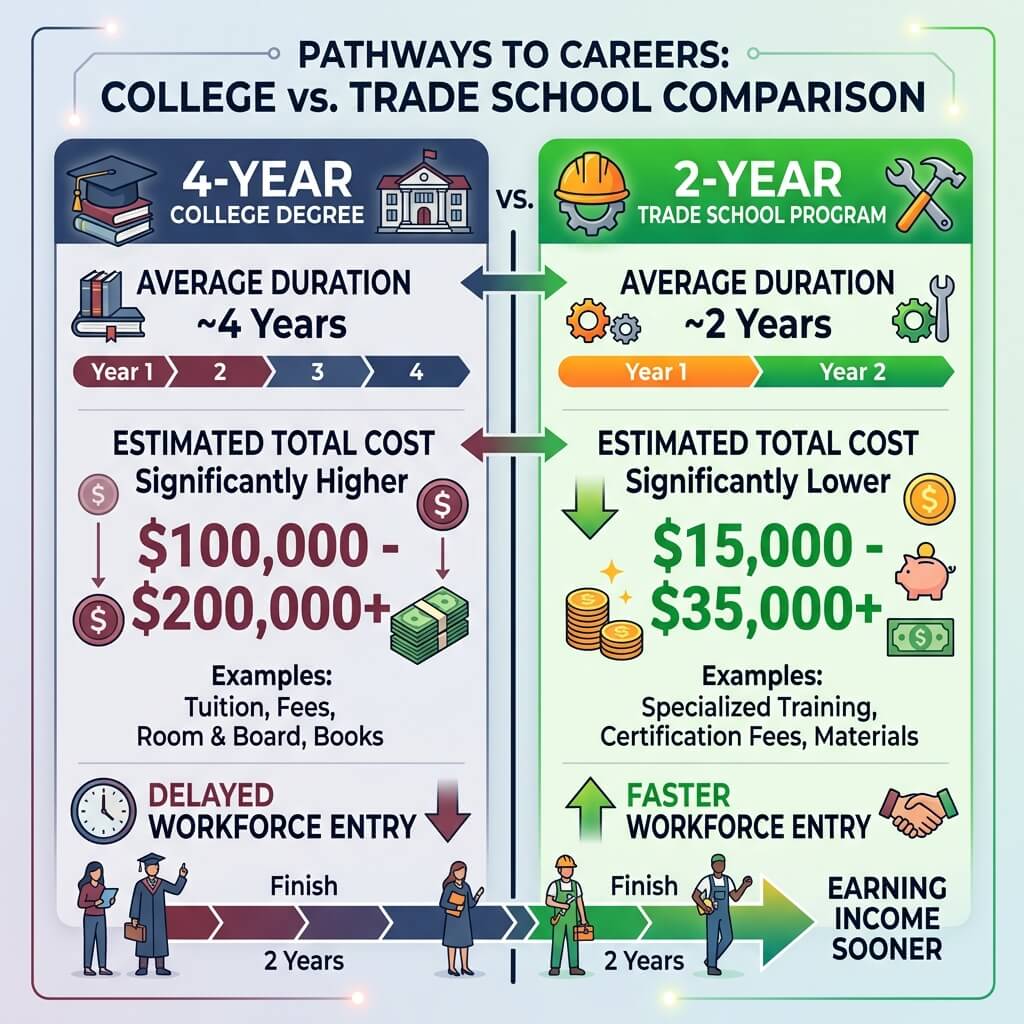
Entering a trade school is a highly strategic career move for anyone looking to enter the workforce quickly. Traditional university degrees require a four-year commitment. Trade programs, on the other hand, typically take anywhere from six months to two years to complete.
This shorter duration translates directly to lower tuition costs and less time spent out of the workforce. You begin earning a salary much sooner than a traditional college student. Skilled trades also experience consistently high job demand. As older generations of tradespeople retire, the need for new, qualified workers grows every year.
Based on the recent data from the U.S. Bureau of Labor Statistics, many skilled trade occupations are projected to grow at a faster-than-average rate over the next decade. This growth means excellent job security and highly competitive wages for those with the right training.
Types of Trade School Financial Assistance
Understanding the different categories of career training assistance is essential for minimizing your out-of-pocket costs.
Trade School Scholarships
Scholarships are one of the best ways to pay for your education because you don’t have to pay the money back. They’re usually given out based on things like your grades, involvement in your community, or the kind of career you want to pursue.
A lot of local groups and industry organizations are keen to support people getting into the trades, so there are plenty of options out there. Starting your search with trade school scholarships can be a smart move when you’re figuring out how to fund your training.
Grants for Vocational Students
Grants operate similarly to scholarships because they also do not require repayment. However, organizations typically award grants based on financial need rather than merit. Federal Pell Grants are a common example, but many states also offer specific grants for vocational students attending approved programs.
Apprenticeship Programs
An apprenticeship is a unique model where you earn money while you learn. You work directly under the supervision of experienced professionals, gaining on-the-job training while completing your classroom coursework. Apprenticeship funding often covers the cost of your classes, and you receive a regular paycheck for the hours you work.
Loans for Trade Programs
An apprenticeship lets you learn the trade while actually working and earning at the same time. You’re on the job with experienced workers, picking up skills day by day, and also attending classes to cover the theory side.
In many cases, the cost of your training is taken care of, and you’re paid for the hours you put in. It’s a practical way to learn without putting your income on hold.
Tools and Equipment Support
Many skilled trades require a significant upfront investment in tools, steel-toed boots, and safety equipment. Fortunately, specific programs provide tools and equipment support to ensure you have exactly what you need for your first day on the job.
Who Can Apply for Financial Assistance?
A lot of people think financial aid is only meant for fresh high school graduates with top grades, but that’s not really how it works. Originally, funding for certain vocational training is open to a much wider group of people than most expect.
- High school graduates: Students transitioning directly from high school to a career program have access to numerous entry-level scholarships and federal aid options.
- Career changers: Adults looking to switch industries can utilize financial aid for trade programs to retrain without taking on massive debt.
- Veterans: Military veterans have access to excellent educational benefits, including the GI Bill, which covers many vocational and technical programs.
- Low-income students: Needs-based grants provide critical support for individuals who might not otherwise be able to afford higher education.
You can learn more about finding the right educational path by exploring different programs tailored to your specific career goals.
How to Apply for Trade School Financial Assistance
Securing funding might seem complicated, but breaking it down into manageable steps makes the process straightforward.
- Choose your trade: Identify the specific career path you want to pursue. Funding options sometimes vary based on the industry.
- Research programs: Take some time to look into different programs and make sure the trade school is properly accredited. This matters because federal financial aid is only offered through schools that are officially recognized by the Department of Education.
- Fill out financial aid forms: Submit the Free Application for Federal Student Aid (FAFSA). This form shows your eligibility for federal grants and low-interest loans.
- Apply for scholarships: Search for local, national, and industry-specific scholarships. Apply to as many as possible to higher your chances of receiving free money.
- Track your application: Keep a detailed spreadsheet of deadlines, required documents, and application statuses to ensure you never miss an opportunity.
Common Mistakes to Avoid
The application process needs careful attention. Avoiding a few common errors can make a significant difference in how much funding you receive.
- Missing deadlines: Financial aid operates on strict timelines. Submitting a form even one day late can disqualify you from receiving thousands of dollars.
- Not applying for multiple programs: Never rely on a single scholarship or grant. Cast a wide net to increase your support.
- Ignoring small scholarships: A $500 scholarship might not seem like much, but winning a few of them quickly adds up to cover your textbooks or tools.
- Choosing the wrong trade: Rushing into a program without researching the daily realities of the job can lead to wasted time and money.
Benefits of Financial Assistance for Trade Students
The most obvious benefit of securing funding is the reduction of out-of-pocket costs. However, the positive impacts extend far beyond your bank account.
When you do not have to worry about how you will pay for your next semester, you experience significantly less financial stress. This peace of mind allows you to focus entirely on your coursework and hands-on training. Better focus leads to stronger skill development and higher performance in your classes.
Also, graduating with little to no debt means you keep more of your hard-earned paycheck when you start working. You can immediately begin saving for a house, starting a family, or investing in your own business.
Real-Life Example: Building a Future in Electrical Work
Think about someone such as Mark. At 24, he’d spent a few years in retail, getting by on low pay without much room to grow. He knew he wanted something more stable, but, college did not seem quite affordable for him at that point.
That’s when he began looking into becoming an electrician.
He researched local vocational schools and filled out his FAFSA. Mark qualified for a federal grant that covered a portion of his tuition. He also applied for a community scholarship designed for adult learners entering the trades, which covered the remainder of his classes. Finally, he connected with a local foundation that provided him with a complete set of starter tools.
With the help of financial support for trade school, Mark was able to finish his training in just 18 months without taking on any debt. Today, he’s working as a journeyman electrician, earning a steady income and feeling secure in his job.
His experience shows how much of a difference the right kind of support can make.
How to Choose the Right Trade Program
Finding the money to pay for training is just one part of the process, you also need to choose a program that actually suits what you want to do.
Start by thinking about your interests. If you like hands-on work and enjoy fixing or figuring out how things work, something like HVAC or auto repair could be a good fit. It even helps to check what kind of jobs are in demand where you live, so you’re training for something that’s actually hiring.
It’s also worth looking at how much you can earn in that line of work, just to be sure it matches the kind of income you have in mind. At the same time, don’t ignore the quality of the training. Try to find a place that has proper equipment, teachers who know the job well, and a history of helping students land work once they’re done.
Future Opportunities After Trade School
Graduating from a trade school opens the door to a lifetime of opportunity. Because skilled trades provide essential services, you enjoy a high degree of job stability regardless of broader economic trends. Homes will always need plumbing, and hospitals will always need diagnostic technicians.
As you gain experience, your growth opportunities multiply. You can move into management roles, become a master in your craft, or transition into project estimation. Many tradespeople eventually leverage their expertise to start their own companies, achieving true financial independence through business ownership.
To discover more about how organizations are paving the way for the next generation of skilled workers, read about our mission.
Start Your Journey Toward a Stable Career
Trade school financial assistance removes the massive barriers that keep hard-working people from achieving their career goals. By taking advantage of scholarships, grants, and tool support programs, you can step into a high-demand industry without the burden of overwhelming student debt. The funding is out there waiting for those willing to put in the effort to find it.
You don’t have to figure all of this out on your own. The Rennell Community Foundation is there to support students with things like financial help, access to tools, and practical career guidance. They focus on helping people build solid, independent futures through skilled trades.
If you are ready to move from learning to earning, we are here to help you get started. Reach out through our contact page today and discover how we can support your journey into the skilled trades.