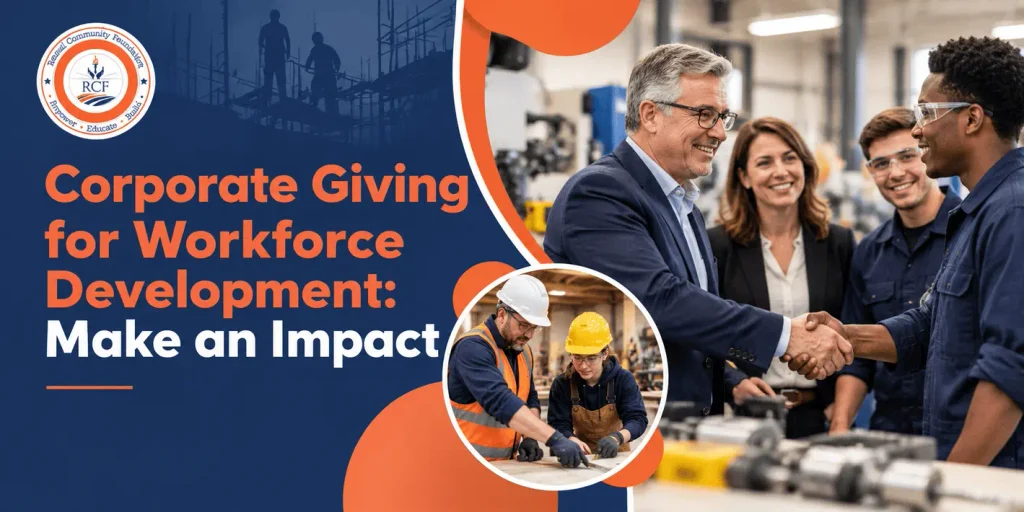
Corporate Giving for Workforce Development: Make an Impact
Every business needs skilled and reliable people to grow and succeed. But learning the right skills takes time, training, tools, guidance, and real work experience. Many training programs and nonprofit organizations help people prepare for better career opportunities. However, they often need support from businesses and the local community to continue this important work.
This is where corporate giving can make a meaningful difference. Companies can support workforce development in many simple ways. They may provide financial donations, sponsor training programs, donate useful tools or equipment, or share knowledge through experienced employees. Businesses can also work with schools, training organizations, and nonprofits to help people learn skills that are useful in today’s workplace.
Corporate giving is not only about donating money. It can bring businesses and communities together around a shared goal of creating more opportunities for people.
Organizations like Rennell Community Foundation (RCF) help support programs supporting skilled trades education and career development, helping create stronger pathways to training, practical skills, and future careers.
What Is Corporate Giving for Workforce Development?
Corporate giving for workforce development refers to the financial contributions and other forms of business support that help organizations and initiatives prepare people for career-ready skills. It’s a broad category, and it looks different depending on the company and the need.
Corporate Donations
The most straightforward form of support is a direct financial contribution to a workforce development nonprofit or program.
Sponsorships
Companies can sponsor specific initiatives, such as a training cohort, a certification program, or a skilled trades workshop.
Tools and Equipment
Businesses often have access to equipment, materials, or resources that training programs need but may not be able to afford on their own.
Employee Expertise
Experienced professionals can share their knowledge as speakers, mentors, advisers, or volunteers, offering insight that no textbook can replace.
Employer Partnerships
To enable better coordination of education and training, the Department of Education (USDE) provides guidance on effective employer-educator partnerships, identified as best practice to align training with needs of the workforce, and to create better career pathways (USDE, LINCS). Businesses are able to collaborate directly with education and training organizations to define relevant training.
Why Workforce Development Matters to Businesses
Both businesses and the community benefit from workforce development. Businesses thrive by what they produce. To maximize their output, they must hire competent personnel. Many readily employable individuals exist, but do not have formal training and experience. Well designed workforce training and development programs create a bridge from unemployment to employability and ultimately to employment.
Corporate foundations, many of which are related to businesses, provide grants to support job training and employment programs and help establish collaborative relationships with schools and other training programs. Through such relationships, companies are able to connect training programs to the world of work.
Active participation by employers helps focus training on job-related skills to enhance employability of trainees. A variety of training and education programs, created in conjunction with employers, increase the pool of skilled and trained workers available to employers.
Why Corporate Giving Can Make a Meaningful Difference
Companies can offer much more than money. They have skilled employees, useful equipment, industry knowledge, business connections, and experience that can help people prepare for careers. When businesses work with nonprofits and training organizations, these resources can help create more learning and other career opportunities.
Corporate giving includes financial contributions to training and employment programs. Companies participate in the provision of vocational skills by donating equipment and other aids. Companies mentor and coach the community members to prepare them for employment opportunities.
Corporate giving is a vital source of funding for nonprofit organizations and other causes. While some people are critical of corporate philanthropy, it is clear that there are a number of positive outcomes associated with it. First, corporations engage in many types of activities that promote employment and career development. While this usually does not include the direct hiring of employees, there are many ways in which corporations and other organizations can work together to provide a means for people to develop certain skills necessary to gain and maintain employment.
7 Ways Companies Can Support Workforce Development
1. Fund Career Education and Training Programs
Many companies have established giving programs that provide grants to career education and training initiatives. With corporate funding, programs can purchase equipment and improve training facilities, purchase training aids and program materials, and compensate trainers and instructors.
2. Sponsor Trade or Vocational Skills Training Programs
Trade or vocational skills training programs such as plumbing, electrical work, HVAC, welding, and construction, are very valuable to the community. Company sponsorships enable the community to obtain skills training and may also provide companies with opportunities to enhance their corporate social responsibility.
3. Donate Tools, Equipment, and Resources
Skilled trades require hands-on learning. Companies can donate useful tools, equipment, materials, or other resources to training programs. These donations can give people a better opportunity to practice skills using equipment they may see in the workplace.
4. Support Scholarships
Training costs can be difficult for some people to manage. Companies can help by supporting scholarships for people interested in skilled trades and career education. Rennell Community Foundation offers scholarship opportunities for future skilled trade professionals to help make education and training more accessible.
5. Mentorship Programs
Employees at all levels have the potential to be great mentors. Companies should encourage employees to participate in different professional development activities, i.e., public speaking events, career fairs, etc. in order to help the next generation of professionals better understand the world of work and various career possibilities.
6. Create Employer-Education Partnerships
Businesses can work with schools, nonprofits, and training organizations. They can share information about current skills, technology, tools, and workplace needs. These partnerships can also strengthen donor funded career training programs by connecting education with real industry experience.
7. Support Work-Based Learning Opportunities
Businesses can also help people experience real workplaces through job shadowing, internships, apprenticeships, facility visits, and other learning opportunities. These experiences can help people understand a career before choosing their next step.
Together, these forms of corporate giving can help businesses support education, practical training, and stronger career opportunities in their communities.
Corporate Giving Goes Beyond Writing a Check
Financial contributions are important, but there are other resources a company can bring to the table. What do you think is the most valuable of the following to a nonprofit organization?
- Financial contributions
- Equipment and tools
- Employee volunteers
- Mentors
- Partners
There are other ways to give financial support, including providing equipment, training volunteers to deliver services, or creating a mentoring relationship. Often, the most valuable resource a company can provide is determined by the particular need of a nonprofit organization or program.
How Corporate Giving Can Support Skilled Trades Education
Skilled Trades encompasses careers like: construction, welding, electrical work, plumbing, HVAC and other related professions. These careers require practical training. A significant part of this training includes observing and performing tasks related to the trade and/or learning the machinery, tools and equipment used in the trade.
The Skilled Trades, by extension, provide a means for businesses to strategically and responsibly integrate their social giving programs. For example, a business can provide equipment and/or machinery for use in trade-related trainings and/or sponsor/subsidize training and/or certification costs. Likewise, businesses can enable their employees to take time off work to teach and mentor individuals learning a trade.
The aforementioned support has the potential to significantly and positively impact the U.S. workforce by developing the skills needed to gain and thrive in the labour market. Additionally, partnering with the schools, non-profits and other organizations involved in workforce development strengthens the U.S. workforce. Corporate social responsibility programs help integrate workplace skills and training with education to better meet the needs of the labour market.
Corporate Sponsorship Can Help Remove Career Barriers
Many people who want to begin a skilled trades career face challenges. Training can cost money, and students may also need tools, safety equipment, learning materials, and certifications. Some people may even have limited access to mentors who may help them.
Support from businesses can help reduce some of these barriers. Companies may provide funding, tools, equipment, scholarships, or other useful resources. This support can make it easier for people to continue their training and build important job skills.
However, corporate donations cannot promise career success. They simply help remove some financial and practical challenges, giving people better access to the training and resources they need.
Employer Partnerships Make Training More Relevant
One of the most valuable things employers can offer isn’t money at all, it’s insight. Employers can help organizations understand current workplace skills, industry expectations, evolving equipment and technology, relevant credentials, and emerging workforce needs.
The U.S. Department of Education released a resource outlining best practices in workforce development. Two key elements of effective workforce practices are establishing employer-educator partnerships and incorporating industry-recognized credentials in workforce training (U.S. Department of Education). Establishing partnerships with employers in the workforce allows training programs to stay current and responsive to the needs of the labor market. To see case studies on employer partnerships in the skilled trades, see our blog on employer partnerships.
How Corporate Giving Supports Local Communities
Corporate giving has positive impacts on the company and the community. The development of skills helps individuals advance their careers, opens up new career opportunities, and positively impacts the workforce.
That said, it’s worth keeping this relationship grounded. Corporate giving is one contributor to community and economic development, not the sole cause of it. Still, corporate community investment plays a real role in helping local economies build a more capable, connected workforce over time.
Corporate Giving vs. Corporate Workforce Partnerships
These two approaches are related, but they aren’t quite the same thing.
| Corporate Giving | Workforce Partnership |
|---|---|
| Financial donations | Ongoing collaboration |
| Sponsorship | Industry guidance |
| Equipment/resources | Mentorship |
| Scholarship support | Work-based learning |
| Charitable contribution | Employer involvement |
Companies don’t have to choose one or the other. In fact, many of the most effective corporate workforce development strategies combine both, pairing financial generosity with sustained, hands-on involvement.
What Should Companies Look for in a Workforce Development Partner?
Not every nonprofit will be the right partner for every business. Before giving support, companies should take time to learn about the organization.
Mission: Check if the nonprofit’s goals match the company’s values.
Programs: Understand what programs it offers and who receives support.
Transparency: Make sure it clearly explains how donations are used.
Community Needs: Look for programs that address real local or industry needs.
Partnerships: See if the company can also provide tools, equipment, knowledge, or mentorship.
Results: Check how the organization measures and shares its impact.
Choosing the right nonprofit can help businesses make their support more meaningful and useful.
How to Measure the Impact of Corporate Workforce Giving
Measuring impact may help both companies and nonprofits know whether their efforts are working. Useful metrics can include:
- Number of people supported
- Scholarships awarded
- Training program participation
- Tools or equipment distributed
- Certifications earned
- Program completion rates
- Mentorship participation
- Employer partnerships formed
- Apprenticeship participation
- Employment outcomes, when reliably tracked
The right metrics depend on the specific program. A scholarship fund might track completion rates, while an equipment donation might track how many students gained hands-on experience as a result.
How Small and Local Businesses Can Participate Too
Workforce philanthropy isn’t reserved for large corporations. Small and local businesses can make a real difference through:
- Modest sponsorships
- Equipment donations
- Employee volunteering
- Career talks at local schools
- Mentorship
- Industry expertise
- Community partnerships
- Direct financial donations
A local business’s contribution may be smaller in scale, but it’s often more personal, and just as meaningful to the students and communities it supports.
How Rennell Community Foundation Connects Giving With Skilled Trades
Rennell Community Foundation works to expand access to skilled trades education and career opportunities through scholarships, tools, training support, mentorship, and community programs. RCF connects the dots between donors, businesses, and the students working to build careers in fields like construction, electrical work, plumbing, and welding.
For businesses interested in workforce development donations or ongoing partnerships, RCF offers a practical way to direct resources whether financial, material, or personal toward the skilled trades pipeline.
Turning Corporate Support Into Long-Term Opportunity
Corporate support can help create more opportunities for people who want to learn useful career skills. A company may provide funding, tools, equipment, training resources, or mentorship. These resources can help people learn new skills and prepare for future career opportunities.
This support does not promise that every person will find a job or build a successful career. Many other factors are also important. However, corporate giving for workforce development can be one helpful part of the process. It can connect businesses, education, training, and communities. When these groups work together, they can help create stronger career pathways and support the future skilled workforce.
Frequently Asked Questions
What is corporate giving for workforce development?
Corporate giving for workforce development includes financial contributions and other business support such as sponsorships, equipment, mentorship, and partnerships that help people build career-ready skills.
Why should companies support workforce development?
Businesses depend on skilled workers, and workforce development programs help build that talent pipeline. Supporting these programs also strengthens local communities and industry-education connections.
How can businesses support skilled trades education?
Businesses can donate tools and equipment, fund scholarships, sponsor training programs, offer mentorship, and partner with educators to align training with real industry needs.
Can companies donate tools and equipment for career training?
Yes. Tools and equipment donations are especially valuable for skilled trades programs, where hands-on learning depends on access to real industry equipment.
What is the difference between corporate giving and workforce partnerships?
Corporate giving typically involves financial or material contributions, while workforce partnerships involve ongoing collaboration, such as industry guidance, mentorship, and work-based learning opportunities.
How can small businesses support workforce development?
Small businesses can contribute through modest sponsorships, equipment donations, employee volunteering, mentorship, and career talks, no company is too small to make an impact.
The Bottom Line
To thrive, businesses need to be able to attract and retain a talented workforce. Communities need effective means to develop their talent. Most importantly, people need the skills to be employable. Workforce development offers an opportunity for businesses, educational and training institutions, and community services to work together for a common goal.
There are numerous ways companies can contribute to workforce development. Companies can build workforce development skills by providing financial donations and/or services such as equipment, resources, scholarships and sponsorships for training.
Corporate giving for workforce development is not only about providing money. It is also about sharing resources, experience, and opportunities that can help strengthen skilled trades education.
Rennell Community Foundation works to support skilled trades education, training, mentorship, and career development. By working together, businesses and community organizations may help create stronger career pathways for the future.
If your company wants to support this mission, connect with Rennell Community Foundation to learn how your business can support skilled trades education and workforce development.