
Skilled Trades Leadership Development: Grow Future Leaders
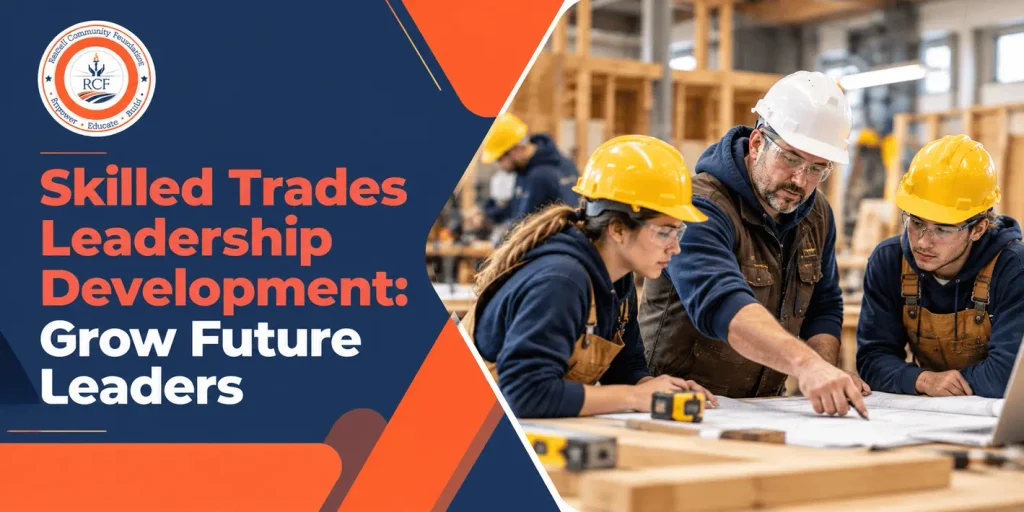
Becoming great at a trade and becoming a great leader are two different things. One takes years of hands-on practice. The other takes patience, communication, and a willingness to teach. Many experienced electricians, plumbers, HVAC technicians, welders, carpenters, and construction professionals reach a point where they do both, they master the work, then guide the people learning it.
That transition is where skilled trades leadership development starts. It’s the process to help technical experts grow into mentors, supervisors, trainers, and industry leaders who shape the future.
This article breaks down what leadership looks like in the trades, why it matters so much right now, the specific skills that make a strong trade leader, and how employers and communities can nurture that talent. If you’re just starting out, programs that help prepare people for successful skilled trade careers can be your first step toward a future that eventually includes leadership.
What Is Skilled Trades Leadership Development?
Leadership development is the process of strengthening the abilities that allow individuals to guide, instruct and assist others. This process in the context of the trades is helping people learn how to direct, teach and oversee activities as diverse as operating tools of the trade and managing other workers on the job.
It is often misunderstood that leading others and instructing oneself are closely associated abilities. This can best be illustrated by the fact that the best craftsperson or journey-level worker is not necessarily qualified to be the best supervisor.
Leading can be synonymous with example setting and demonstration. A craftsperson setting a positive example by assisting a new employee in performing a task is leading. A craftsperson bringing to the attention of the supervisor a situation that may pose a threat to the safety of employees is also example-setting.
There are leadership qualities in many if not all persons, and most, if not all, of those in the trades are qualified to be good leaders, and the same may be said of many in other professions. Leading is manifested in many ways, but in the field of the trades it takes the form of example-setting and mentoring.
Why the Skilled Trades Need Future Leaders
The trades are facing a simple math problem. Experienced workers are getting older, and many will retire in the coming years. When they leave, they take decades of hard-won knowledge with them unless someone is ready to carry it forward.
As reported by U.S. Bureau of Labor Statistics, from the years 2024 to 2034, about 649,300 job openings in construction and extraction occupations are expected each year as a result of expansion and to replace fled workers. For the occupations predicted to have the greatest openings, the demand for skilled supervisory workers will also be the greatest.
Future leaders matter because they:
- Pass knowledge and experience to newer workers
- Help maintain safety and quality on every job
- Coordinate increasingly complex projects
- Guide and develop apprentices
- Strengthen the overall stability of the workforce
Without strong leaders, teams struggle. Projects fall behind. Safety slips. Skilled trades leadership development is how the industry protects its future.
Leadership Skills Every Skilled Trade Professional Should Develop
Leading people in the skilled trades requires different abilities and talents beyond technical expertise. These skills can be developed.
Communication
Workers are paid to perform a job. Leaders are responsible for informing workers of job requirements and expectations. Explaining job responsibilities may sound simple, but doing so effectively can help create a safe and secure working environment and improve overall workplace efficiency and productivity.
Problem-Solving
Murphy’s Law states that anything that may goes wrong will go wrong. Best-case scenarios turn into worse-case scenarios. The ability to remain poised and collected while problem-solving is essential to leadership. Leaders are encouraged to identify the problem, consider the available options, and select the best option to implement as the solution.
Cooperation
Professionals in the skilled trades work on interdisciplinary teams. The ability to functionally collaborate with other professionals is essential. Having a positive attitude toward interdisciplinary teamwork enables the leader to assist other professionals in functioning as an interdisciplinary team member.
Safety Leadership
Safety should always be a focus. As a leader, you should always abide by the safety procedures and employ and use the appropriate safety equipment. Showing confidence in safety equipment and procedures builds confidence in other individuals’ safety.
Accountability
A good leader always owns his/her/their actions. A good leader keeps his/her/their word and has the courage to apologize when wrong.
Flexibility
The world of work is constantly changing. Good leaders embrace new ways of working, help their teams adjust, and learn new ways of working.
Mentoring
Leaders at all levels should be motivated to assist employees in their professional development, both personally and by providing opportunities to strengthen their professional skills.
These skills help to enhance the knowledge of the workers in the skilled trades and help enhance and develop leadership skills.
From Skilled Worker to Skilled Trades Leader
Advancement in skilled trades happens in a linear fashion. It might look something like this:
Trainee ➝ Apprentice ➝ Skilled Professional ➝ Lead Worker ➝ Supervisor ➝ Mentor ➝ Industry Leader
Each position grants additional knowledge and responsibility. As a trainee, one is taught the very basics, and as an apprentice, one learns through on-the-job training. Ultimately, an individual can teach or lead other workers.
It is also worth noting, there is a good deal of variability in the nature of each career. It is not uncommon to see an individual leaving their legacy through mentorship or business ownership. Ultimately, the opportunities are limitless.
Why Mentorship Is Essential to Leadership Development
You can’t talk about leadership in the trades without talking about mentorship. It’s the bridge between doing great work yourself and helping others do great work too.
Skilled trades mentorship delivers value in many ways. A good mentor provides:
- Knowledge transfer passing on techniques and lessons learned the hard way
- Confidence reassuring newer workers as they build their skills
- Technical, showing the right way to handle tricky tasks
- Problems and Solutions in the Workplace
- Teaching Advanced Business Etiquette
- Solving Problems
- Coaching
- Mentoring
- Training to Prepare the Future Workforce
Mentorship isn’t a side activity. According to Apprenticeship.gov, structured on-the-job learning with an experienced mentor is a core part of Registered Apprenticeship, paired with related classroom instruction. In other words, mentoring is built right into how the trades train their future workforce.
How Apprenticeships Help Develop Future Leaders
Apprenticeships help develop leadership skills. The camaraderie and training that take place on the job help apprentices build the skills they will use as leaders throughout their careers.
During an apprenticeship, an individual learns:
- A work regimen where learning occurs both on the job and in the classroom.
- How to gain and hone skills under the direction of a journey level person in their trade.
- The ins and outs of their trade through work experience.
- How to take on a greater role as their skills develop.
- Each rung on the career ladder.
Most importantly, a strong trade mentor help shape the next generation of leaders in their trade.
Leadership Development Helps Improve Workforce Retention
Here’s something employers sometimes overlook: leadership development keeps people around. When workers see a future with their company, they’re far more likely to stay.
Career-development opportunities help workers:
- See a real future with their employer
- Take on new and meaningful responsibilities
- Grow professionally over time
- Become mentors to others
- Move toward supervisory roles
People rarely leave a job where they feel valued and see room to advance. That’s why leadership development and retention go hand in hand. For a deeper look, explore these workforce retention strategies that support long-term career growth.
How Employers Can Develop Skilled Trades Leaders
Good leaders need time, support, and experience to grow. Employers can help skilled workers develop leadership skills in several simple ways.
Find Leadership Potential Early
Do not look only at technical skills. Pay attention to workers who communicate clearly, help their teammates, solve problems, and stay calm during difficult situations. These qualities can show leadership potential.
Create Mentoring Opportunities
Give experienced workers opportunities to guide newer employees. Mentoring helps new workers learn while giving experienced workers a chance to practice leadership.
Provide Leadership Training
Offer training in communication, teamwork, planning, safety, problem-solving, and handling workplace challenges. These skills can help workers become more confident leaders.
Give More Responsibility
Allow promising workers to take small leadership roles. They might lead a task, help manage part of a project, or train a new employee. Small responsibilities can prepare them for larger roles.
Show a Clear Career Path
Explain what skills, experience, and training workers may need to move into leadership positions. Clear goals can help employees plan their growth.
Recognize Leadership Efforts
Appreciate workers who mentor, train, guide, and support others. Recognition can show employees that leadership and teamwork are valued within the company.
Technical Skills Alone Don’t Make a Great Leader
This is where many careers stall. Being excellent at the work doesn’t automatically make someone a great leader. The two skill sets overlap, but they’re not the same.
| Strong Tradesperson | Strong Trade Leader |
|---|---|
| Completes quality work | Helps the whole team produce quality work |
| Solves technical problems | Helps others learn problem-solving |
| Understands safety | Builds a safety-focused culture |
| Has experience | Shares experience |
| Completes responsibilities | Builds accountability across the team |
The strongest leaders combine technical credibility with genuine people skills. They’ve earned respect through their work, and they use that respect to lift everyone around them.
How Leadership Development Supports Workforce Succession
All organizations eventually loses their most experienced personnel. Succession planning is the complete process of identifying and preparing individuals to fill key positions in the organization. Smart managers anticipate this and implement plans to act in a timely manner.
Succession planning is an element of leadership development that helps organizations:
- Address leadership vacancies in a timely manner.
- Retain organizational memory.
- Create mentors that promote and guide the next level leaders.
- Achieve and sustain organizational goals that are focused on quality and employee safety.
- Maintain stability during transition.
Succession planning focuses on developing the next level of organizational leaders to fill critical vacancies that occur when the current leaders attain retirement age.
Through strategic leadership development processes, organizations can have leaders at the appropriate levels when they are needed.
Removing Barriers to Skilled Trade Career Growth
Not everyone has a clear road to leadership. Real barriers can stand in the way, including:
- Training costs
- Certification and licensing expenses
- Access to the right tools
- Limited career guidance
- A lack of available mentorship
These obstacles are especially tough for people just starting out. Removing them opens the door for talented workers who might otherwise never get the chance to grow. That is where support makes a huge difference. Scholarship support for future skilled trade professionals can help cover training and certification costs, that gives more people the chance to continue their development and eventually lead.
How Communities Can Help Grow Future Trade Leaders
Others besides companies are responsible for leadership development. Schools, training organizations, non-profits and businesses have a part to play in providing opportunities for people to expand their capabilities and get ready to assume leadership roles.
Some of these organizations are:
- Schools and training programs that help students and adults learn vocational and work-related skills.
- Organizations that sponsor, fund and manage apprenticeships and other work-related trainings and mentorships.
- Industry associations that provide information, resources and guidance to members.
- Non-profits that provide financial assistance and/or support work-related training and other vocational programs.
- People that provide mentorship and sponsorship to those starting out in their careers.
- People and organizations that provide financing for vocational and technical training.
When these organizations and people in the community partner and work together, they can empower people to learn and develop their skills and leadership potential. This can help address current and future workforce development needs of the community.
Building the Next Generation of Skilled Trades Leaders
A skilled trades leader grows through several stages. A simple career journey may look like:
Opportunity → Training → Experience → Mentorship → Responsibility → Leadership → Giving Back
Everyone is a little apprehensive on their first day at a new job. Building self-assurance and ability with the right guidance, training and experience over time is something everyone is capable of.
Later, they may become a supervisor, mentor, instructor, business owner, or community leader. Every skilled leader starts somewhere and often learns from someone with more experience.
When experienced workers share their knowledge with newer workers, they help prepare the next generation and support a stronger skilled trades workforce.
Closing Thoughts
A person who is new to the skilled trades can grow into an experienced worker, mentor, supervisor, or future leader. But this growth needs time, training, guidance, and the right opportunities. Someone must be willing to teach, share experience, and support workers as they develop their skills.
Leadership development for skilled trades is beneficial at all levels of an employee’s career. It prepares staff to assume greater responsibility. It also gives current, more experienced employees the opportunity to train the next group of employees. This benefits employee retention, and creates a positive working environment.
Rennell Community Foundation is partnering with diverse organizations to provide career development and skills training in the area of skilled trades. Skilled trades employees are able to continue their professional development, and have the opportunity to advance in their field.
A collaboration of employers, mentors, and nonprofits provide training and development to create a pipeline of future leaders. For more information on how to develop the next generation of leaders in skilled trades, and to partner with the Rennell Community Foundation, please contact us.
Rennell Community Foundation welcomes your inquiries about building the next generation of skilled trade leaders.
Frequently Asked Questions
What is skilled trades leadership development?
It’s the process of helping skilled workers grow beyond technical work into roles like mentor, trainer, supervisor, or industry leader. It builds communication, teamwork, safety, and mentoring skills so experienced professionals can guide and support the next generation of workers.
What skills does a skilled trades leader need?
A strong trade leader needs clear communication, problem-solving, teamwork, safety leadership, accountability, adaptability, and mentoring ability. These people skills combine with technical credibility to help leaders guide teams, train apprentices, and keep job sites productive and safe.
How can skilled workers become supervisors or leaders?
Workers usually grow through experience, mentorship, and increasing responsibility. Taking on small leadership tasks, guiding newer workers, and completing leadership training all help. Clear advancement paths from an employer also make the move from skilled worker to supervisor much easier.
Why is mentorship important in skilled trades?
Mentorship transfers knowledge, builds confidence, and teaches workplace expectations. Experienced mentors guide newer workers through technical challenges and career decisions. It’s also a core part of apprenticeships, helping preserve skills and develop the next generation of capable, confident trade leaders.
Can apprenticeships help develop future leaders?
Yes. Apprenticeships combine structured learning, experienced mentors, and hands-on experience with growing responsibility. Apprentices who train under strong mentors often become strong mentors themselves, making apprenticeships one of the most effective ways to build future skilled trades leaders.
How can employers develop leadership skills in trade workers?
Employers can spot leadership potential early, create mentoring opportunities, offer leadership training, give workers more responsibility, build clear advancement paths, and recognize those who help others. These steps turn skilled workers into confident leaders and improve retention at the same time.