
Career Retention in Skilled Trades: Building Lasting Careers
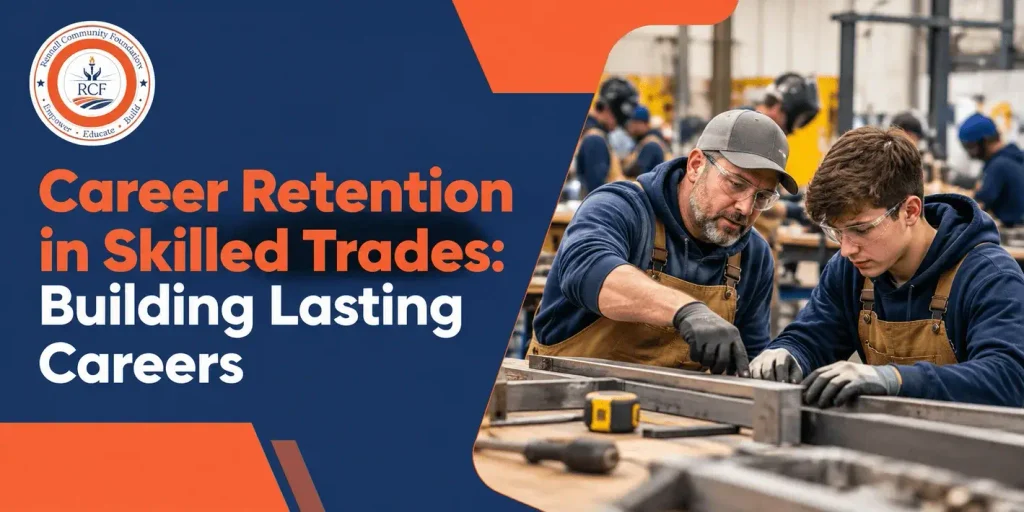
Starting a career in skilled trades is an important first step. But helping people stay, grow, and build a long-term career is just as important. Hiring can fill an open position, but keeping skilled workers helps businesses build stronger and more experienced teams.
This is why career retention in skilled trades matters. Industries such as electrical work, plumbing, carpentry, welding, HVAC, and construction need trained people. Bringing new workers into these careers is important, but the work does not stop there. People also need good training, support, guidance, and opportunities to improve their skills.
When workers can see a clear future in their trade, they may be more likely to continue learning and growing in their careers. Experienced workers can also become mentors and help new people entering the industry.
Employers, mentors, training programs, and community organizations may all support this process. Rennell Community Foundation supports programs that help build practical skills and career opportunities.
This blog explains why workers may leave, what can help them stay, and how stronger career paths can support the skilled trades.
What Is Career Retention in Skilled Trades?
Career retention in skilled trades means helping trained workers stay in their trade and build a long-term career. It is not only about keeping someone at one company. It is also about helping workers improve their skills, gain experience, grow professionally, and see a future in their chosen trade.
Recruitment and retention are different. Recruitment brings new people into skilled trades. Retention helps them continue their careers after they start.
Keeping skilled workers is vital because experience takes time to build. An experienced electrician, plumber, welder, carpenter, or HVAC technician may have years of practical knowledge that new workers are still learning.
Retention should begin from the first day. New workers need good training, clear guidance, support, and opportunities to grow. When people understand and know their career path and feel supported, they may be more likely to stay and continue developing their skills.
Why Career Retention in Skilled Trades Matters
It’s beneficial to all to keep skilled workers in their field. The following is a list of reasons to increase the focus on employee retention in the skilled trades.
- We keep around skilled workers to replace expensive, skilled, off-the-shelf talent.
- We keep around skilled workers to avoid a talent shortage.
- We keep around skilled workers to keep around skilled workers.
- We keep around skilled workers to help businesses.
- We keep around skilled workers to help the community.
- We keep around skilled workers to help create other skilled leaders.
It’s obvious why employee retention in the trades is valuable; the numbers back it up. The U.S. Bureau of Labor Statistics showed the construction industry having a quit rate of 1.8% for the month of June 2026. Each of the 152,000 construction industry quit rate stats represent a worker leaving with years of on-the-job experience and talent. Check out the employment turnover stats to see how construction compares with other industries.
Why Skilled Trade Workers Leave Their Careers
The first step to keeping employees is understanding why they leave. There are a number of reasons, and we’ll discuss the most common.
Limited Opportunity for Growth
Employees have to be able to envision themselves beyond their current role. If not, they may be considering other opportunities where they can.
Lack of Leadership
New employees may feel overwhelmed when they can’t reach out to more experienced employees for help and feedback. This may lead the employee to consider leaving.
Work/Life Balance
If employees don’t feel appreciated and/or respected, why would they want to stay? Employees are more likely to leave if they don’t feel valued by their organization.
Not Learning and Growing
Employees want to know their employer cares about their future. If their current employer isn’t going to help them develop, employees may believe their future career growth is stagnant.
Difficult and Demanding Work
Unreasonable expectations may lead employees to feel physically and/or mentally drained which may lead them to consider other opportunities.
The above reasons may lead employees to consider leaving your organization. Understanding why employees leave may help keep other employees.
7 Ways to Improve Career Retention in Skilled Trades
Great retention is the result of deliberate strategies to help employees develop their careers. Here are a few strategies to help with retention in the skilled trades.
1. Offer Good Mentorship
When companies assign more seasoned employees to mentor new employees they provide valuable knowledge, answers and help build confidence for new employees.
2. Establish Career Development Opportunities and Outline Possible Advancement Opportunities
Employees should be made aware of what their next step is, and what opportunities exist for advancement to leadership positions.
3. Offer Training
This helps employees learn new skills, use new technology and be trained on new methods and techniques. Training can also help employees attain certifications and maintain their careers.
4. Reward and Recognize Employees
Employees like knowing their work is appreciated. Sometimes a simple thank you is all it takes. Other times more formal recognition is warranted.
5. Develop Future Leaders
Allow your employees to develop leadership abilities by providing them more responsibility. Offer mentorship or promote them to lead positions. This provides your employees a way to further develop their career.
6. Encourage a Positive Work Environment
A good workplace nurtures relationships between employees and creates an environment where employees feel safe. Employees should be able to express their ideas and concerns.
7. Clarify Career Paths
Employees should be able to imagine what their career may look like in the future. Employees should be able to picture what their career in the skilled trades may look like including advanced positions in the field, management, mentorship, or entrepreneurship.
The U.S. Department of Labor (USDOL) provides additional resources to help with the recruitment and retention of apprentices.
USDOL resources may be beneficial to other stakeholders as well.
How Apprenticeships Support Long-Term Career Retention
Apprenticeships do more than teach a trade. They build the foundation for a lasting career.
During an apprenticeship, workers learn directly from experienced professionals. They pick up practical skills that no classroom can fully teach. Just as important, they build workplace relationships that make them feel connected and supported.
Apprenticeships also create clearer advancement pathways. A structured program shows exactly what comes next, which helps apprentice retention. The transition from apprentice to experienced professional feels less like a leap and more like a natural next step.
If you want to understand how someone moves from training into steady work, you can learn a trade career path and build a strong career foundation with a clear, step-by-step approach.
Mentorship Can Turn a First Job Into a Lasting Career
While numbers tell the impersonal side of the story, people tell the other side. This is particularly true in relation to mentorship and retention.
No training manual is as effective as having an experienced coworker to guide you in this field. A great mentor helps you to:
- Identify solutions to work-related problems,
- Grow your self-confidence,
- Interpret the employer’s unwritten rules of the workplace,
- Enhance your proficiency in use of the employer’s specialised equipment,
- Envisage your future career development within the organisation.
Clearly, a caring, skilled trades mentor is instrumental in determining whether an employee stays in the workforce, and for how long.
Career Growth Helps Skilled Workers Stay
People are more likely to stay when they can see opportunities to grow. A skilled trades career may follow a path like this:
Trainee → Apprentice → Skilled Professional → Supervisor → Mentor → Leader or Business Owner
A clear path helps workers understand what they can work toward in the future. Career growth in skilled trades can turn a starting job into a long-term career. As workers gain skills and experience, they may take on more responsibility and explore new opportunities. This may give them more reasons to continue learning, growing, and staying in their trade.
The Role of Employers in Skilled Worker Retention
Employers hold much of the power when it comes to retention. Practical actions matter more than good intentions. This is what makes a difference:
- Quality onboarding – Start new workers off with clarity and support.
- Training – Support continuing education and professional development.
- Mentorship – Provide experienced staff to help new staff.
- Recognition – Publicize and reward outstanding staff performance.
- Communication – Get feedback from staff and provide it to management.
- Advancement – Offer real opportunities to move up.
- Leadership opportunities – Let promising workers lead.
None of these steps require a massive budget. Most simply require intention and consistency. Employers who do these things well tend to keep their best people.
How Community Organizations Can Support Career Retention
Employers are not the only ones who can support skilled workers. Nonprofits and community organizations can also help people start, learn, and grow in skilled trades careers.
Community organizations may provide:
- Career education and awareness
- Training resources
- Mentorship programs
- Scholarships
- Tools and equipment
- Employer and community partnerships
Rennell Community Foundation helps support skilled trades education through scholarships, tools, training support, mentorship, and career guidance. These resources may help reduce some barriers people may face while preparing for a trade career.
The development of employees’ skills, both in the workplace and outside of it, often requires collaboration among businesses, nonprofits, training organizations, and mentors. This is particularly true in the development of workforce and career skills.
Financial Support Can Strengthen Career Foundations
Money problems cause many people to leave the workforce prematurely. Scholarships typically do not cover all costs associated with training. While scholarships will not retain all employees, covering or assisting in the payment of employee training costs may encourage employees to seek additional training.
When someone can afford tuition, testing fees, and the right tools, they can focus on learning instead of worrying about bills. That stronger start often leads to greater commitment down the road. A worker who begins with the resources they need is more likely to stay the course.
Rennell Community Foundation offers scholarship support for future skilled trade professionals to help remove those early obstacles, giving new workers a firmer footing from day one.
From New Apprentice to Long-Term Skilled Professional
There are several paths available for someone looking to pursue a career in skilled trades. An example of a typical career path is:
Career Exploration → Training → Apprenticeship → First Job → Mentorship → Advanced Skills → Leadership
There are many ways a person can become aware of various skilled trades occupations. Some of these ways include school programs and activities, family members, friends and community programs.
After getting their first job, support from an experienced mentor can help them learn and handle challenges. Over time, they can build advanced skills and take on more responsibility.
This journey shows why retention matters. Each stage builds important skills and experience that can support long-term career growth.
Building the Next Generation of Skilled Trade Leaders
Retention and leadership go hand in hand. When workers stay, they gain the experience needed to lead. Skilled trades leadership development turns experienced workers into the mentors and supervisors of tomorrow.
Leadership development is made up of the following elements:
- Experienced employees pass on their knowledge to less experienced employees
- Management skills are taught
- Leaders undergo continued development
- Employees are trained to replace existing employees
- Businesses engage in succession planning.
Leadership development is combined with several other programs to reduce employee turnover and strengthen an organization. Through these efforts, existing employees mentor and teach new employees, and these new employees continue the same efforts when the opportunity presents itself.
Career Retention Creates Stronger Communities
Keeping skilled workers can benefit more than one company. It can also help the wider community.
Worker Stays → Builds Skills → Gains Experience → Mentors Others → Workforce Grows → Community Benefits
The knowledge and experience that a worker acquires over a long and productive career is an irreplaceable asset to a company. More experienced employees help to train and develop less experienced employees.
Stability and long-term careers benefit families, communities, and the economy. It adds even more value to the service when the employees are trained and experienced, further enhancing and adding stability to the industry.
Final Thoughts
Retaining workers in the skilled trades means providing opportunities for workers to refine and advance their skills, provide them with mentorship and leadership opportunities and paint a vision for the future. Workers must see that there is an opportunity to be part of something bigger than themselves. Retention is just as important as attraction.
Skilled trades workers can best be described as “self-starters.” Once employed, mentorship and training coupled with opportunities for advancement and promotion greatly assist workers in visualizing a successful career and provide a sense of purpose in their work and for the community.
Community organizations provide training and resources that help fill the gaps for skilled trades workers. Mentorship is essential for turning a lackluster first career in the trades into a fulfilling lifelong occupation. Strengthening the trades helps reinforce the community and gives a sense of purpose.
Rennell Community Foundation supports the future of skilled trades by helping remove barriers to education, training, tools, mentorship, and career development. By supporting future trade professionals today, communities can help build a stronger and more experienced workforce for tomorrow. To get involved, connect with Rennell Community Foundation to learn how you can support the skilled trades.
Frequently Asked Questions
What is career retention in skilled trades?
Career retention in skilled trades means keeping trained workers engaged and growing in their field over the long term. It focuses on helping workers advance, learn, and build lasting careers rather than simply filling open positions through recruitment.
Why is employee retention important in skilled trades?
Retention preserves valuable skills, reduces workforce shortages, and lowers hiring costs. Experienced workers take years to develop, so keeping them protects businesses, strengthens communities, and ensures knowledge gets passed to the next generation of trade professionals.
How can employers retain skilled trade workers?
Employers can retain workers through quality onboarding, ongoing training, mentorship, recognition, open communication, and clear advancement paths. Offering leadership opportunities also helps. These steps show workers their employer values their long-term growth, giving them a reason to stay.
Does mentorship improve career retention?
Yes. Mentorship helps newer workers solve problems, build confidence, and understand workplace expectations. A trusted mentor makes early challenges easier to handle, which reduces the chance that a new worker quits during the difficult first stages of their career.
How do apprenticeships support long-term trade careers?
Apprenticeships let workers learn from experienced professionals, build practical skills, and form workplace relationships. They also create clear advancement pathways, making the transition from apprentice to skilled professional smoother and helping workers commit to a long-term career.
What causes skilled workers to leave their jobs?
Common causes include limited career advancement, lack of mentorship, poor workplace culture, gaps in training, and burnout from heavy workloads. Addressing these issues early helps employers keep skilled workers engaged and committed to their trade careers.